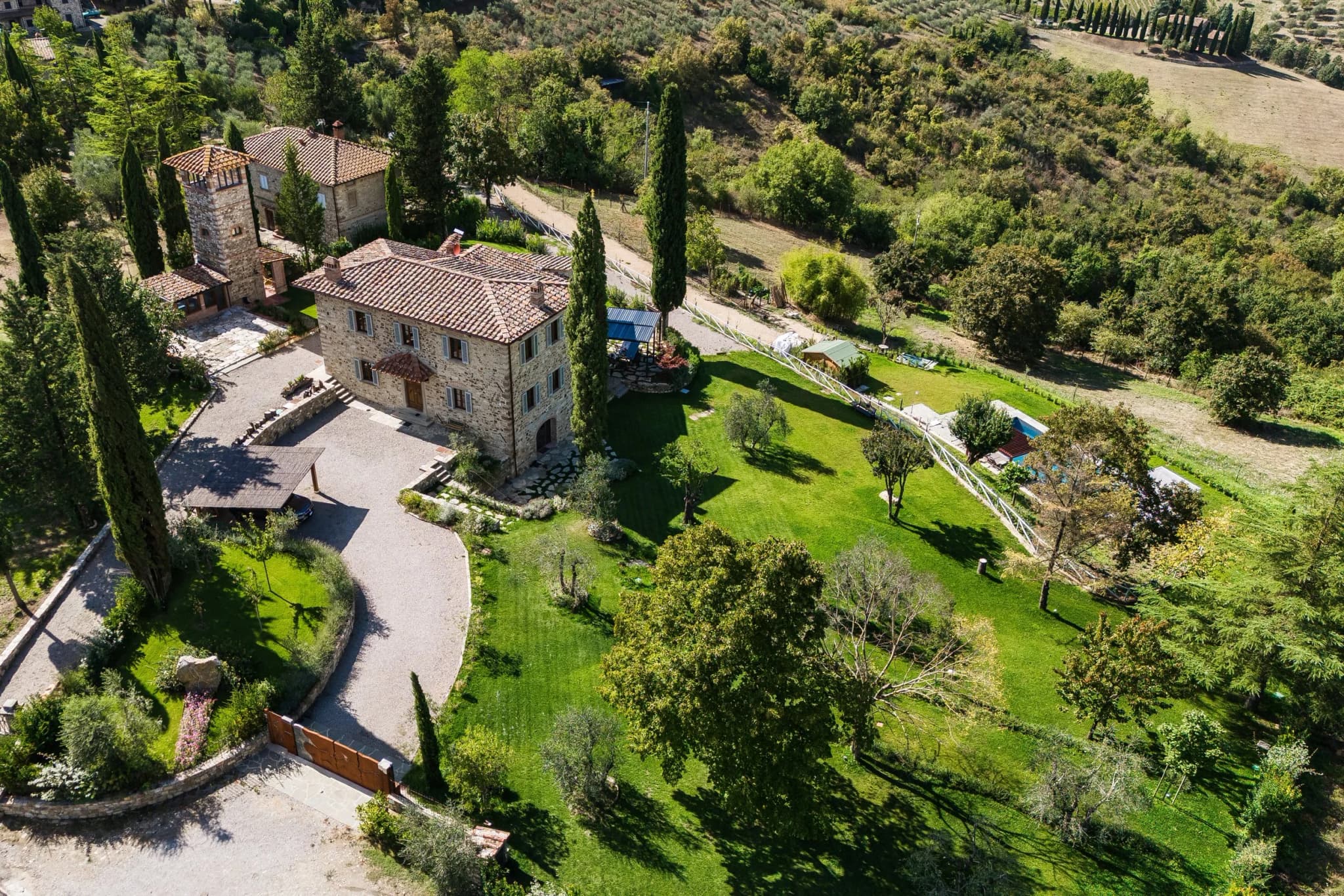
Four and a Half Centuries of Stone and Silence
The story of a house that has watched empires rise and fall from its hill above Radda in Chianti
Radda first appears in the written record in 1003 - an edict of Emperor Otto III, where the ridge above the Arbia valley is spelled "Ratta." A thousand years later, the village sits at 530 metres, population 1,587, still watching the same valley from the same high ground. Some places are chosen for a reason that outlasts the choosing.
Close your eyes. The Chianti comes to you through what you smell before what you see, what you hear before what you touch.
Spring arrives as ginestra - wild broom, sweet and honeyed, flooding the hillsides in yellow. Then fennel, dog rose, the sharp green of cut grass after rain. Summer is the scent of hot dust on the strade bianche, warm stone releasing the day's heat at dusk, crushed thyme and rosemary underfoot on the walking trails. Autumn changes everything: fermenting must seeps from cellar doors across every village, woodsmoke climbs from farmhouse chimneys into still air, and peppery olio nuovo fills the frantoio with a perfume that stings the eyes. Then the truffle - earthy, pungent, otherworldly - a scent that stops conversation mid-sentence.
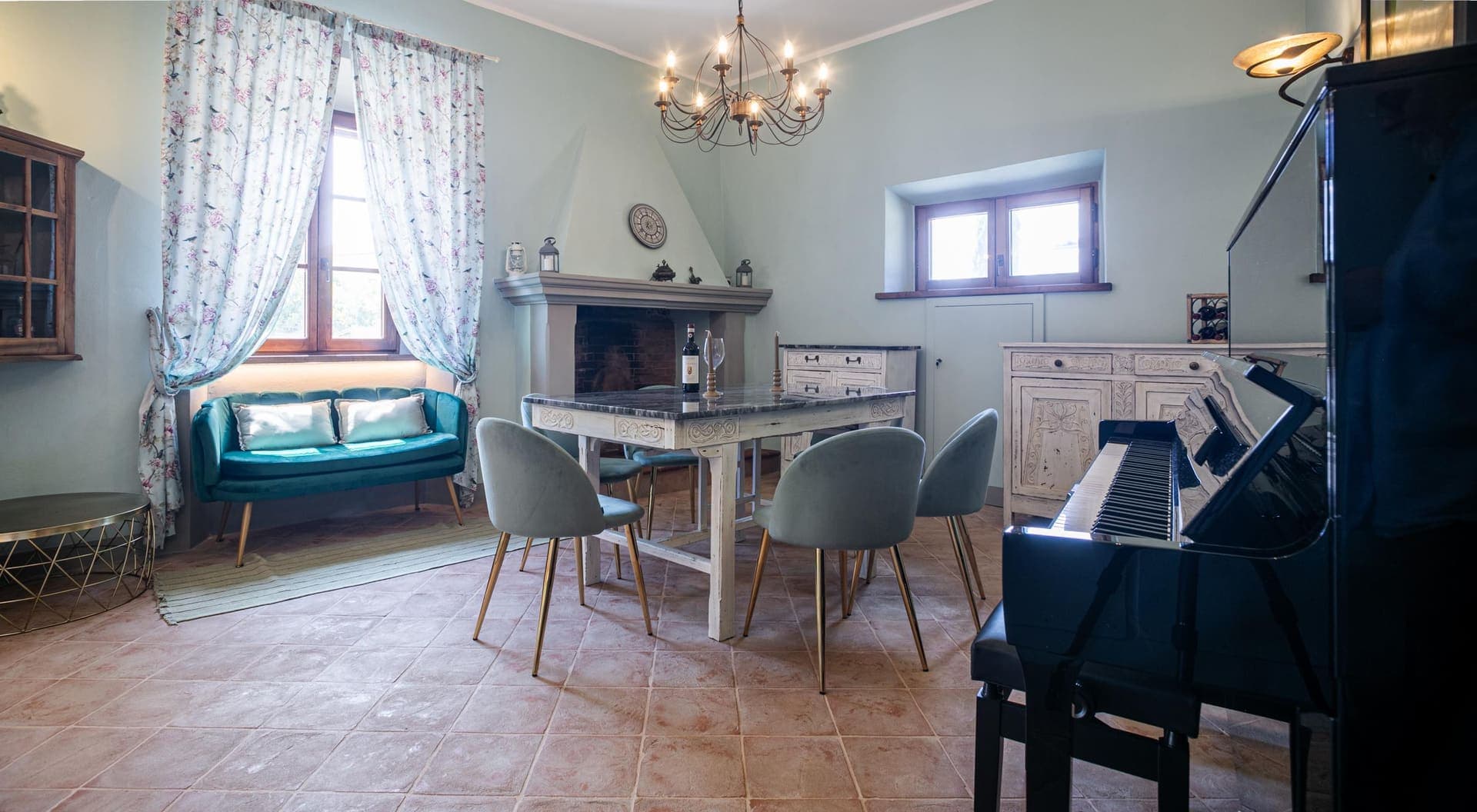
Summer cicadas build a wall of vibration that rises at noon and does not stop until dark. In spring, dawn breaks with birdsong and the swallow's liquid chattering call - a sound like water running over small stones. Autumn brings the snip of secateurs in the vineyard, the thud of crates stacking, the mechanical hum of the frantoio pressing olives through the night. Winter is near-silence: the crackle of oak in the fireplace, rain on stone, wind finding the gaps between shutters. Year-round, the cypress sighs when the breeze moves through. Year-round, the church bells mark the hours from Radda's campanile.
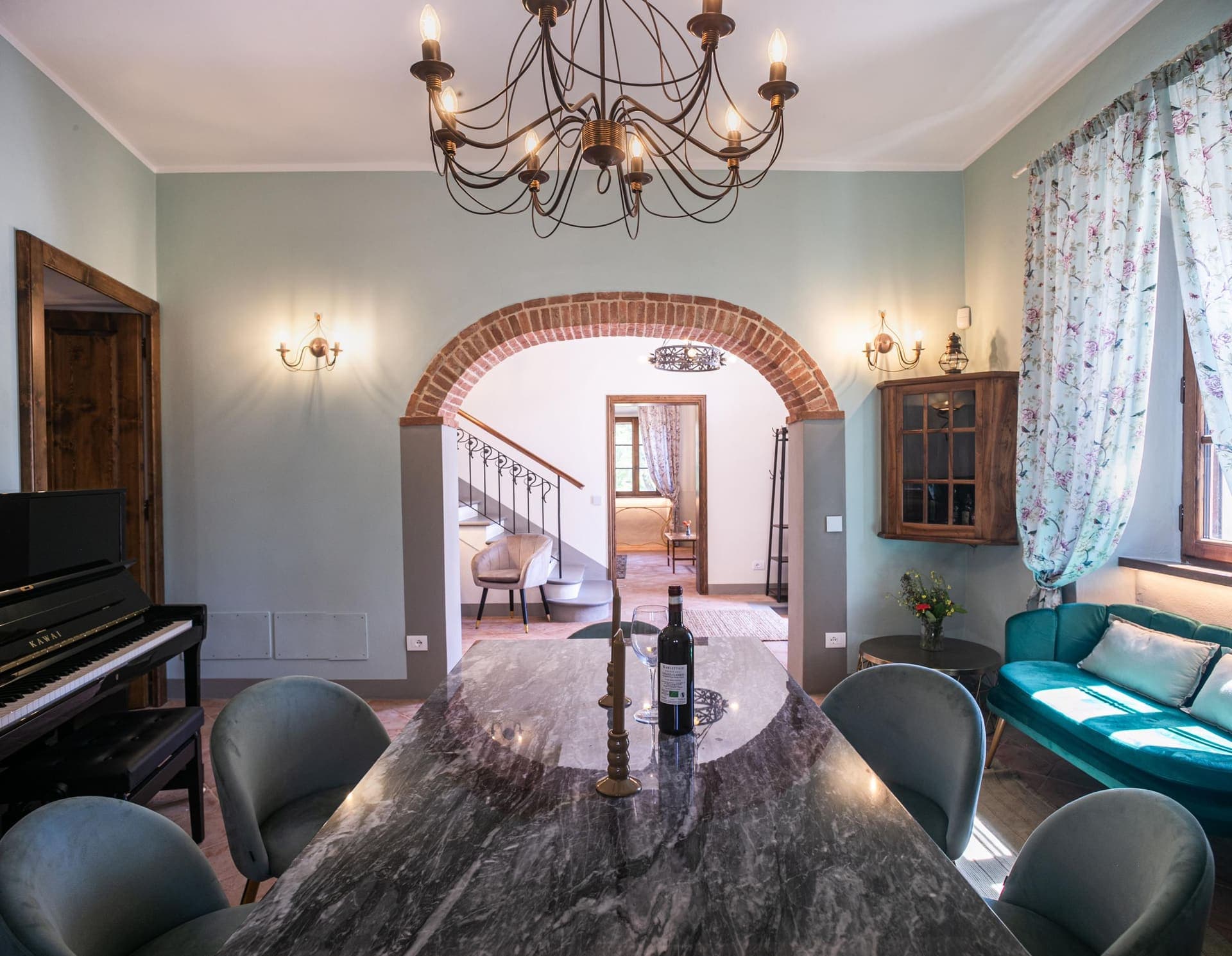
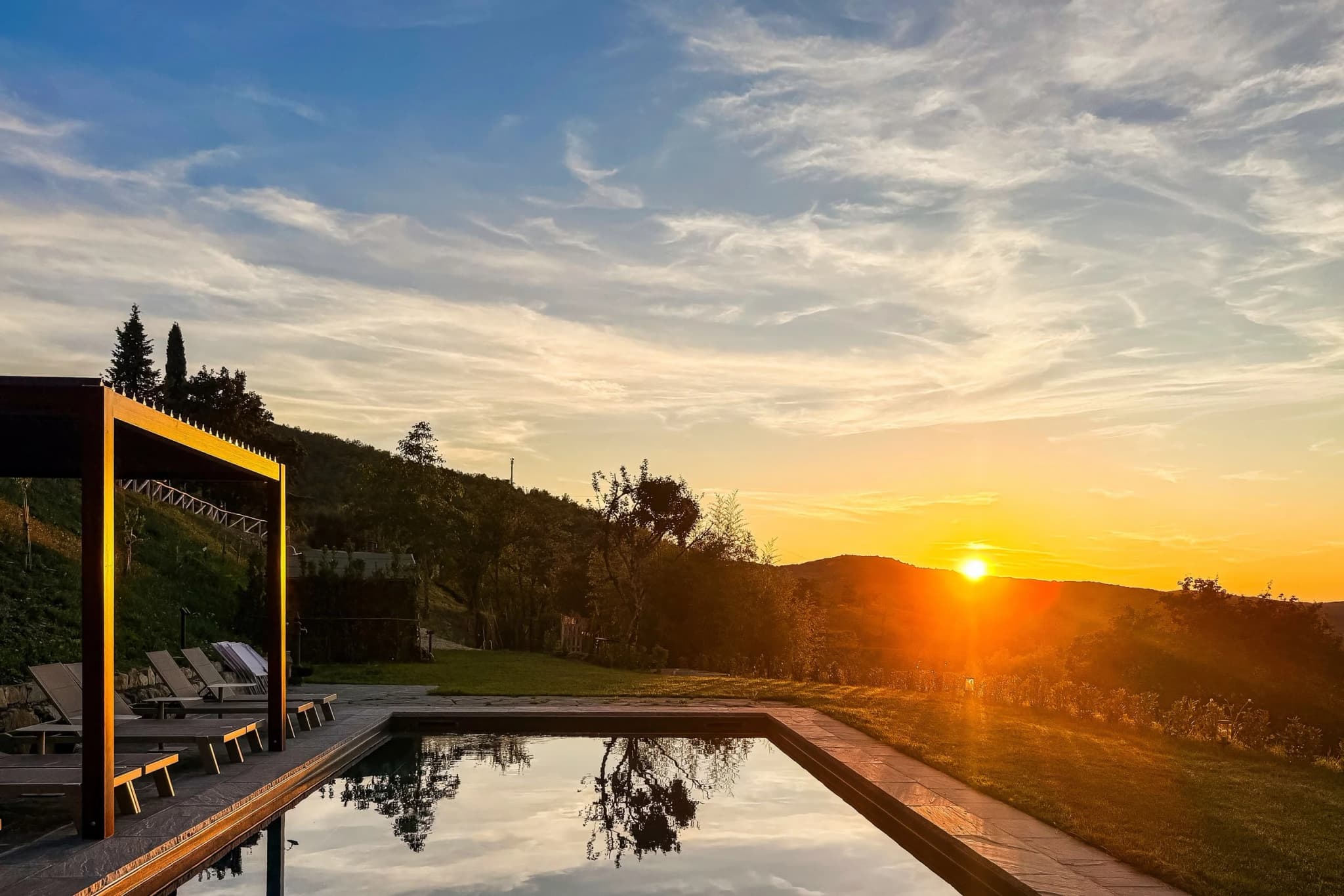
The light here has a specific character that painters chase and cameras cannot hold. Morning enters through east-facing windows as pale gold, turning the pietra serena warm. By afternoon, the shadows grow long and the olive groves shimmer silver-green against the dark earth. Then the sunset - the hour this terrace was made for - when terracotta fades to gold, the hills dissolve into violet, and the air itself seems to glow. October light is the richest: a deep, honeyed amber that makes every surface look ancient and precious.
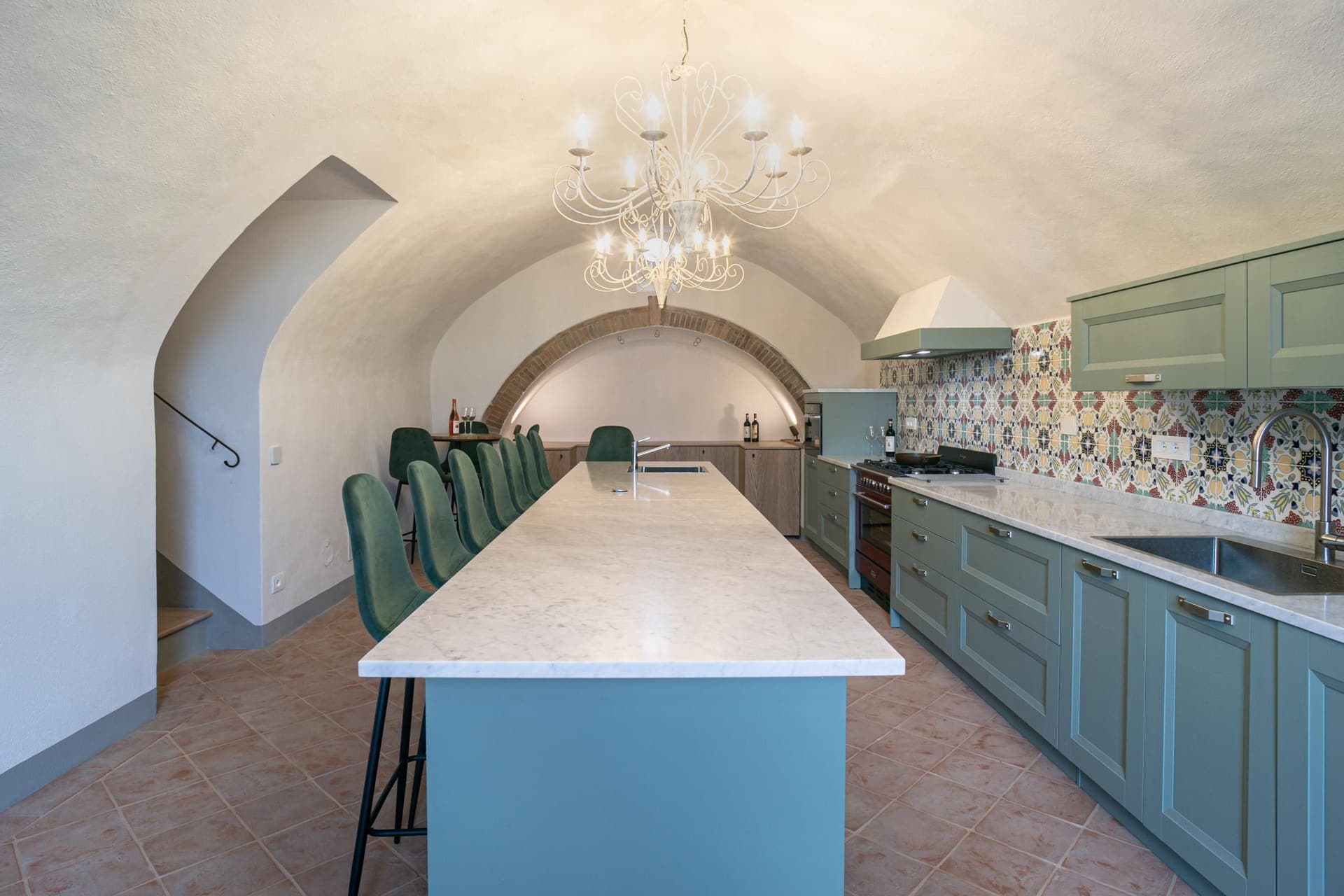
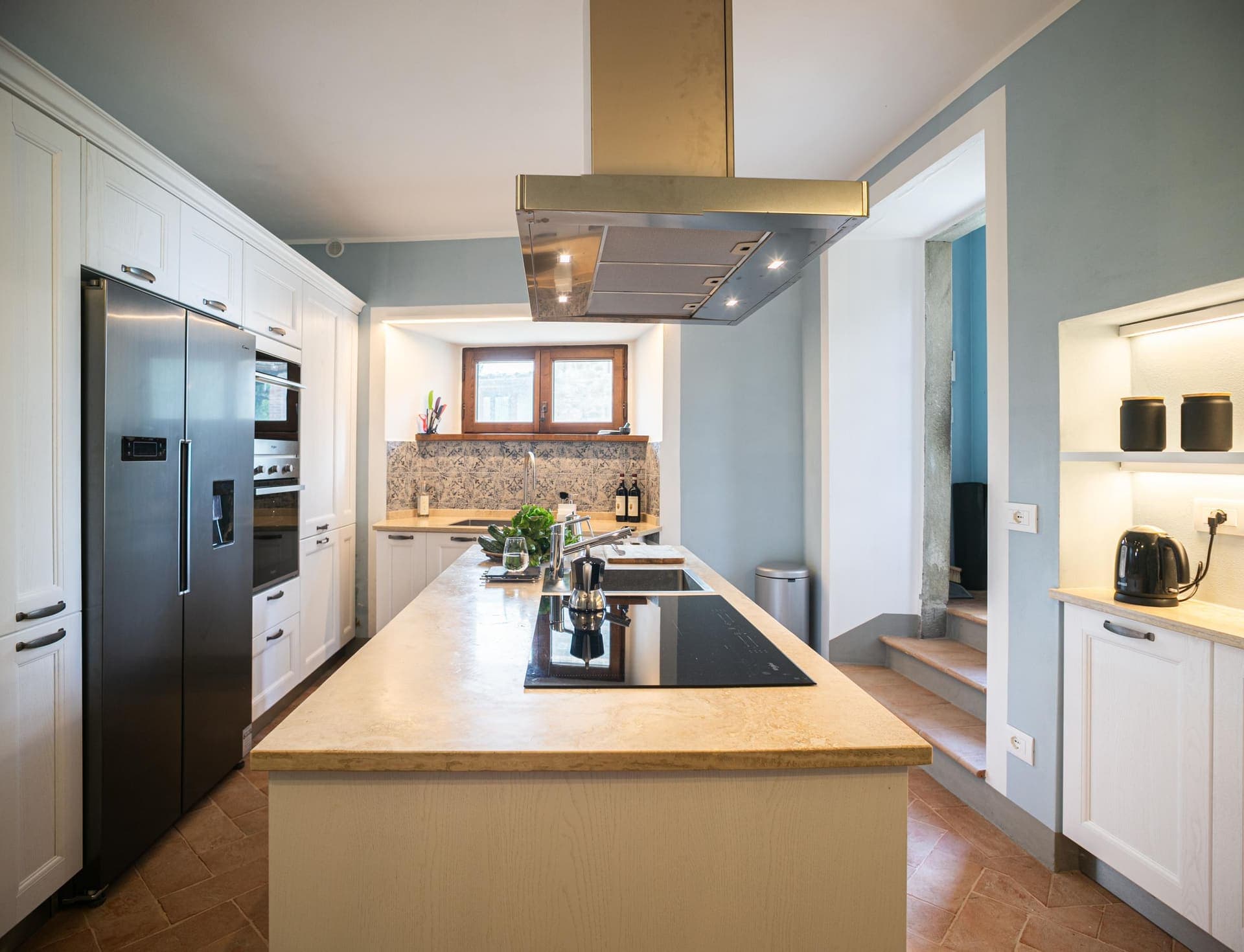
Olio nuovo drizzled on unsalted bread - the first taste of November, peppery and green and alive. Ribollita, the twice-boiled soup of black cabbage and yesterday's bread, warming from the centre outward. Fresh pici, hand-rolled and thick, dragged through wild boar ragu. Sangiovese in the glass, all cherry and leather and tobacco, with a finish that tastes of the specific hill where its grapes grew. Pecorino that changes with every month. Coffee that ends every meal, dense and black, in a cup small enough to disappear in your hand.
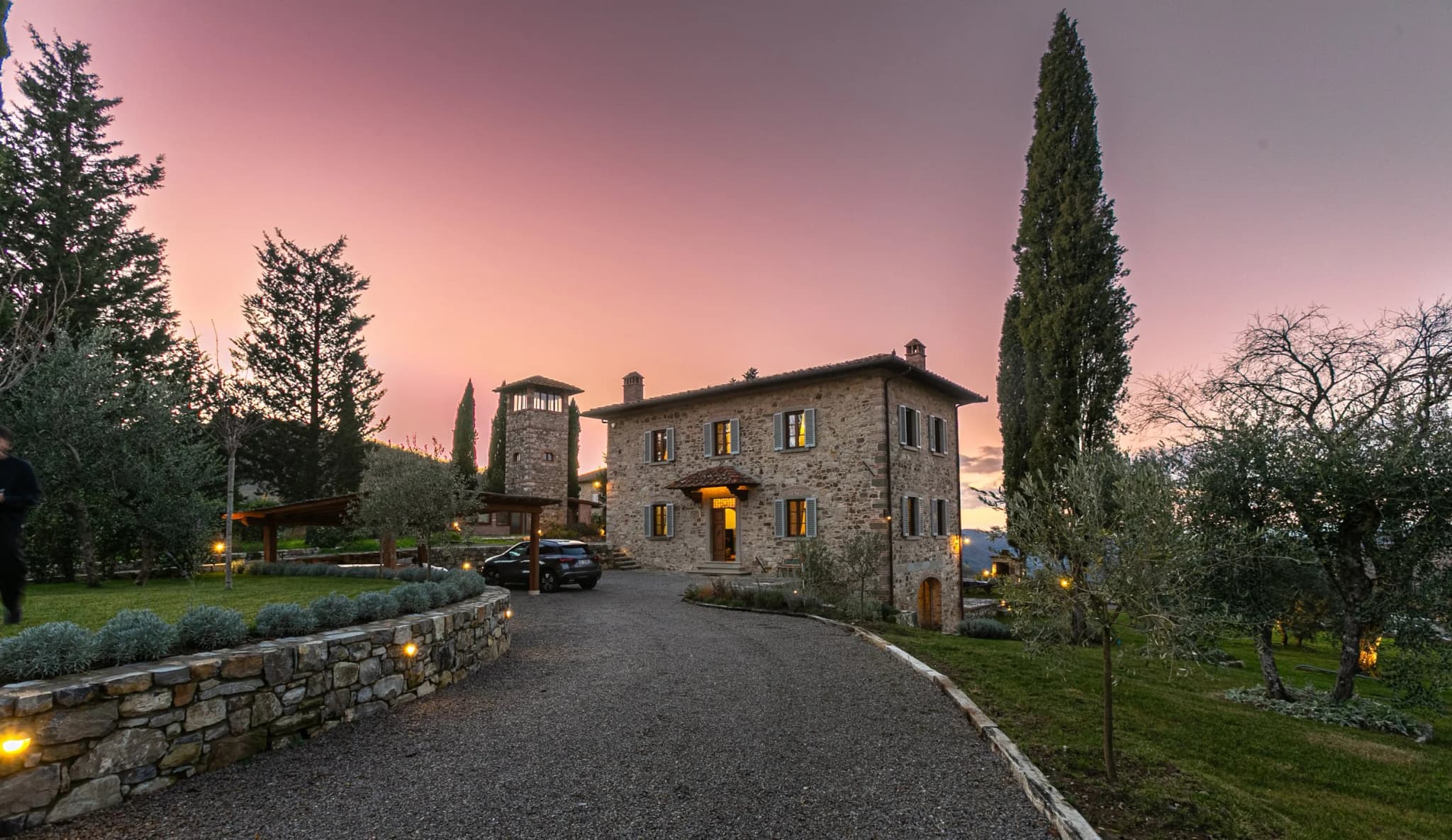
The Only Sunset Viewpoint in Radda
Le Rondini commands the sole panoramic sunset viewpoint in Radda in Chianti. This is not marketing - it is geography. The villa sits on the western edge of the hill, facing the valley where the sun falls each evening behind a silhouette of cypress and olive.
Painters and photographers have been drawn to this light for generations. The colours are specific to this place: terracotta fading to gold, olive groves turning silver, the distant hills of San Gimignano dissolving into violet. It happens every evening. It is never the same twice.
Begin Your Stay
Le Rondini welcomes a limited number of guests each year. There is no booking engine. No instant confirmation. Your stay begins as it should - with a conversation.
Begin Your Stay