Amenities
A house is its details. At Le Rondini they have been earned over four centuries, not invented. The kitchen arches were built to cure salami. The watchtower was built to see the soldiers. The cantina was carved to age wine. Each room still serves the purpose it was made for, quietly.
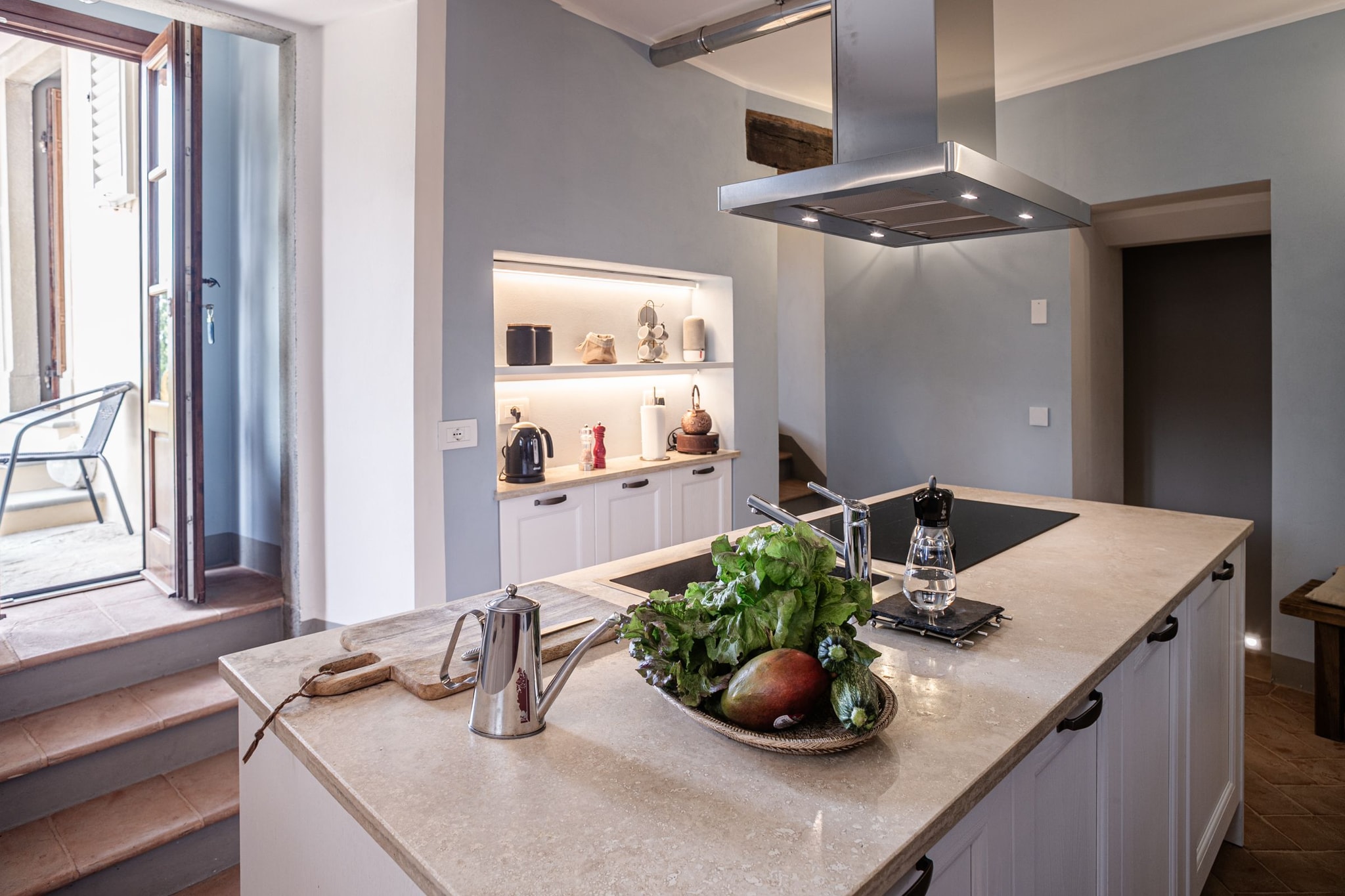
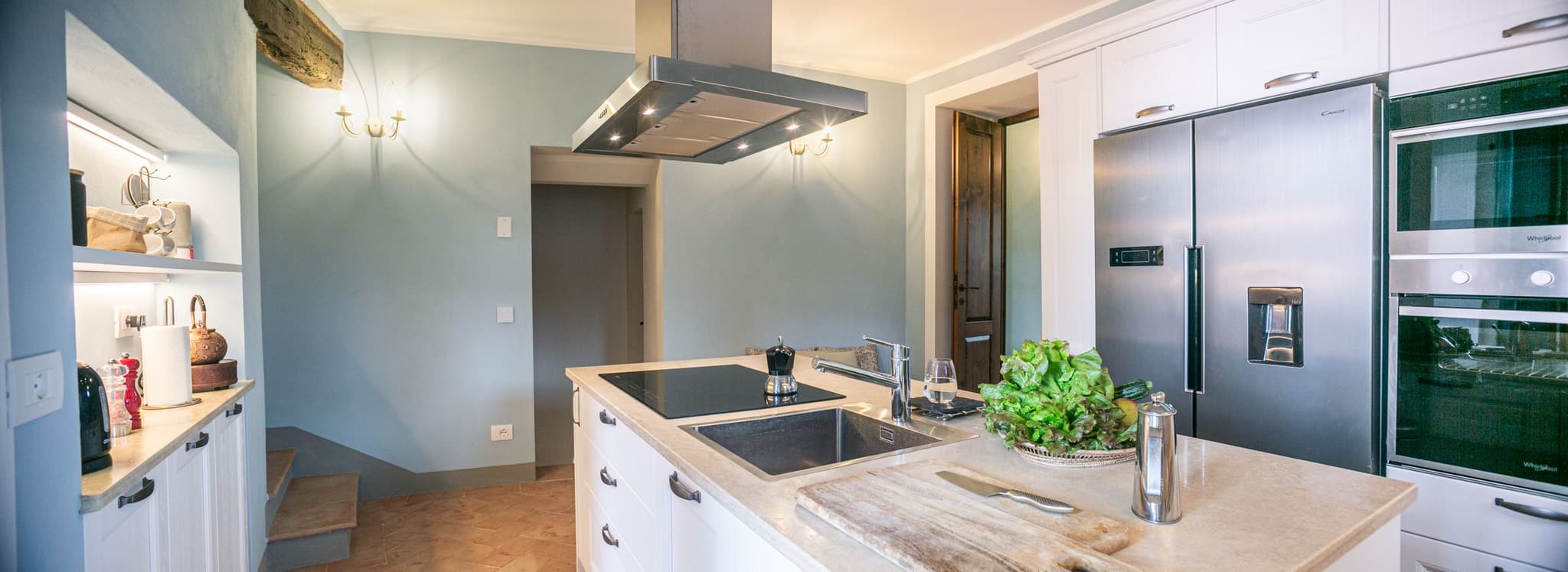
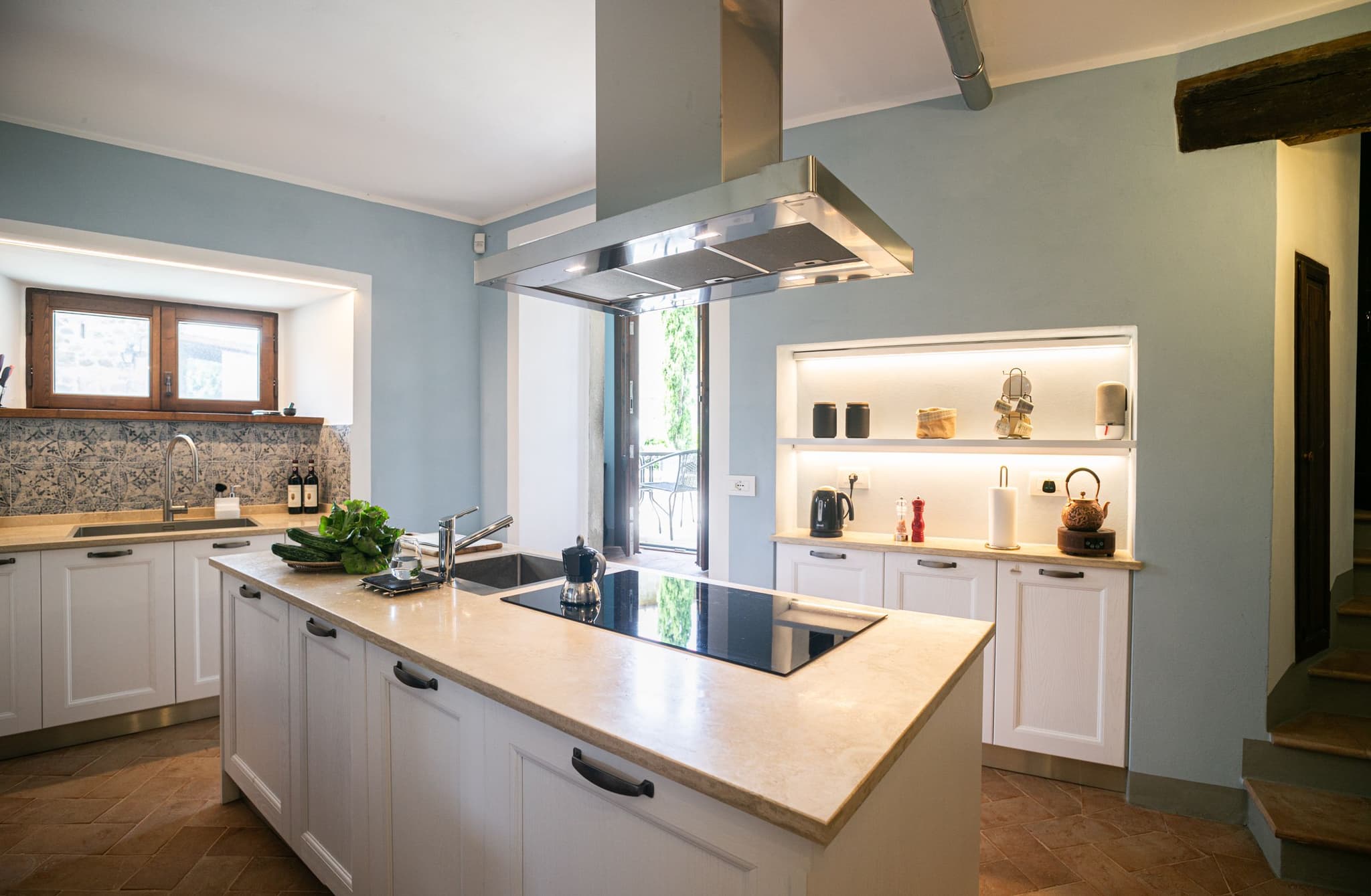
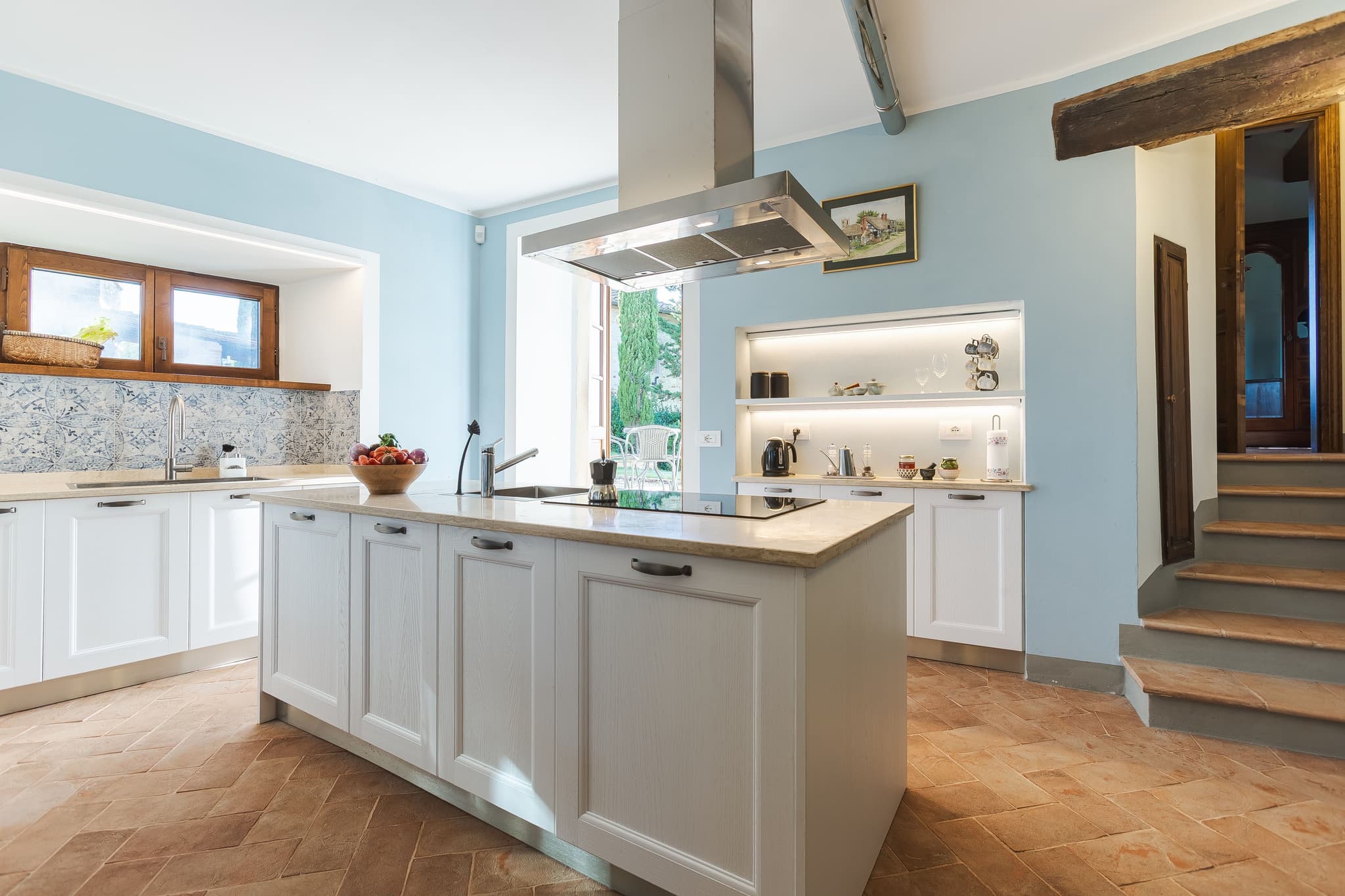
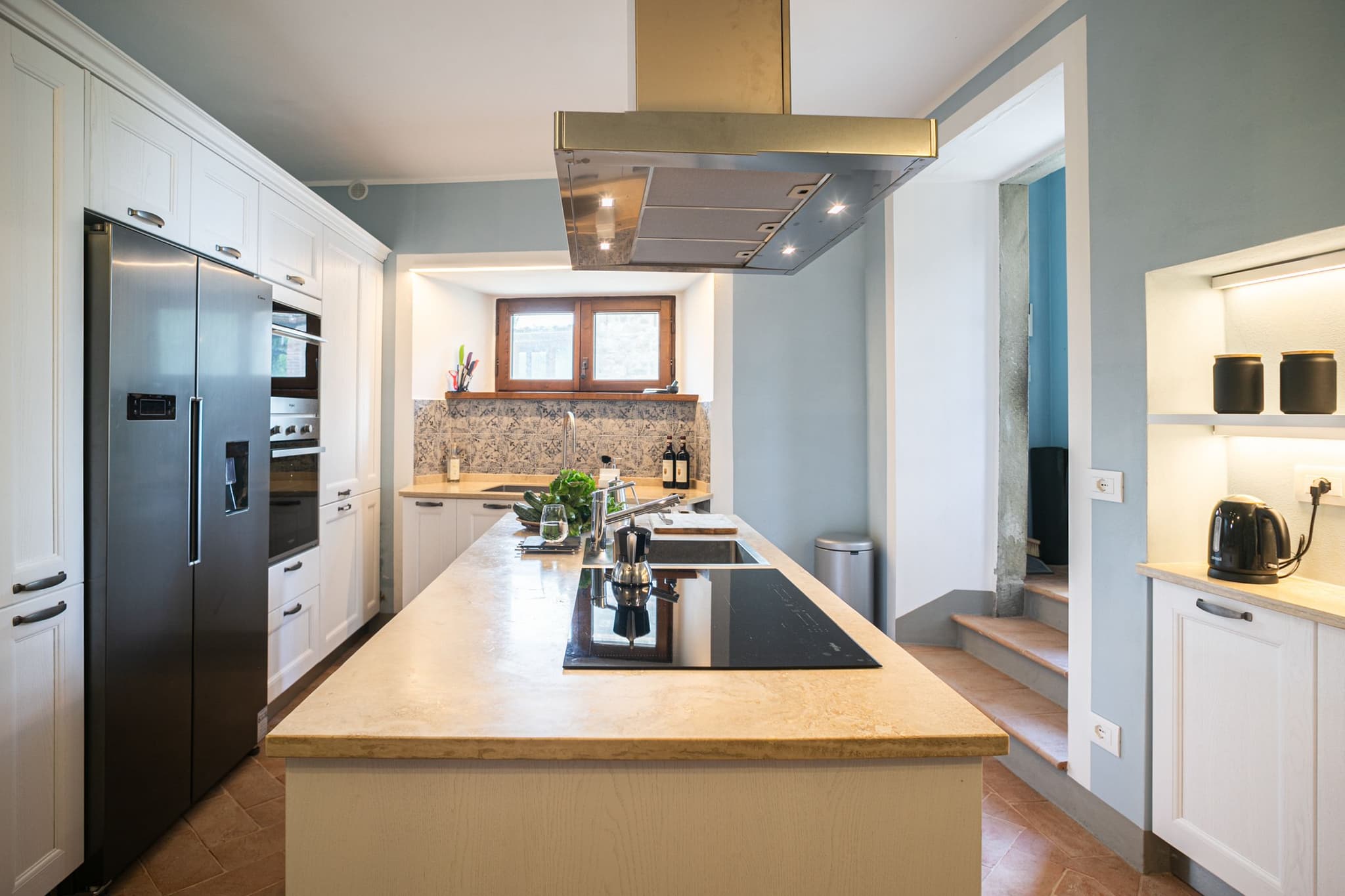
The everyday kitchen opens to the dining room on one side and the garden patio on the other. Mornings begin here: coffee on the stove, sunlight crossing the terracotta, the newspaper open on the table. Inside flows to outside in the way Italian architecture does best.
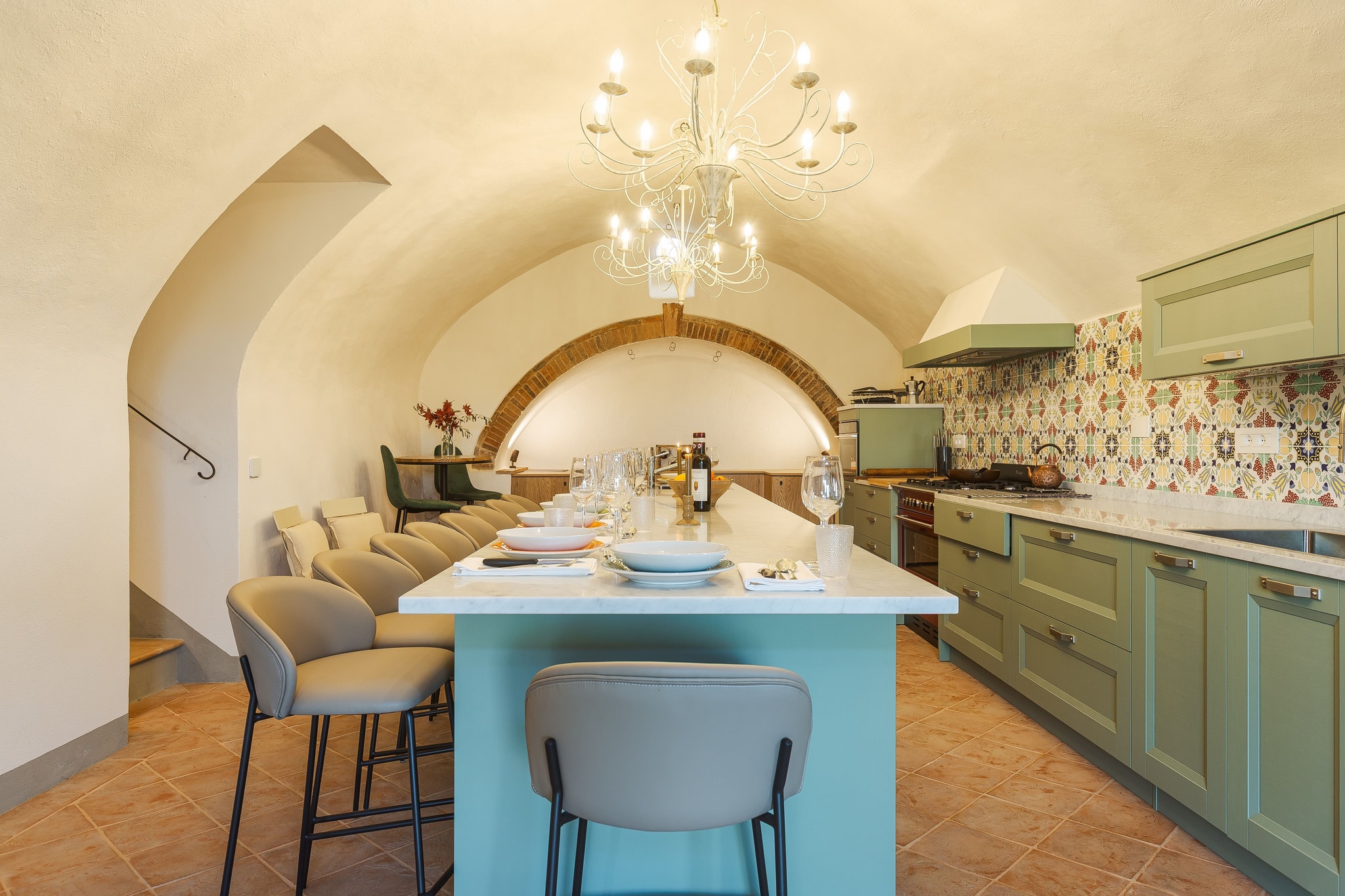
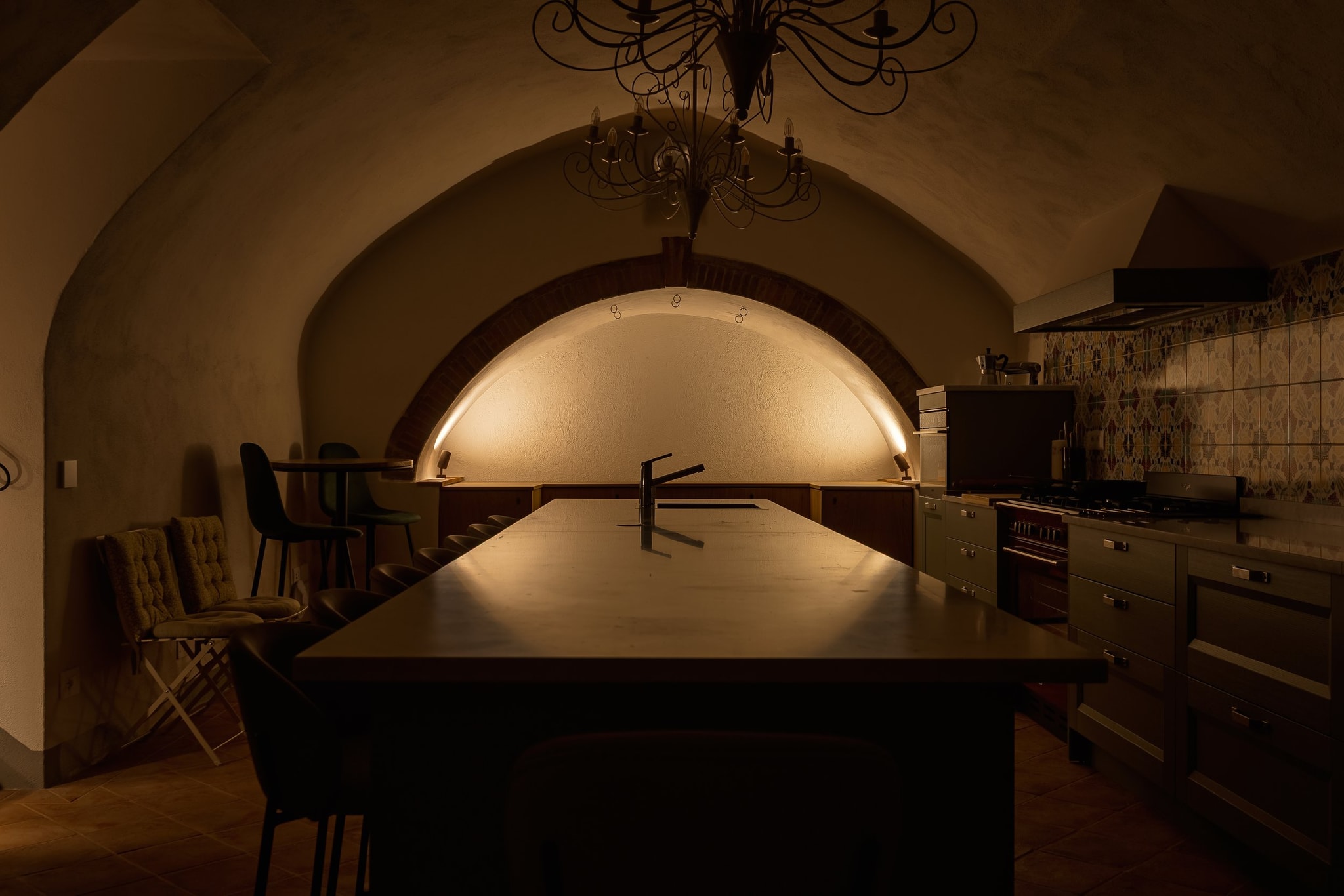
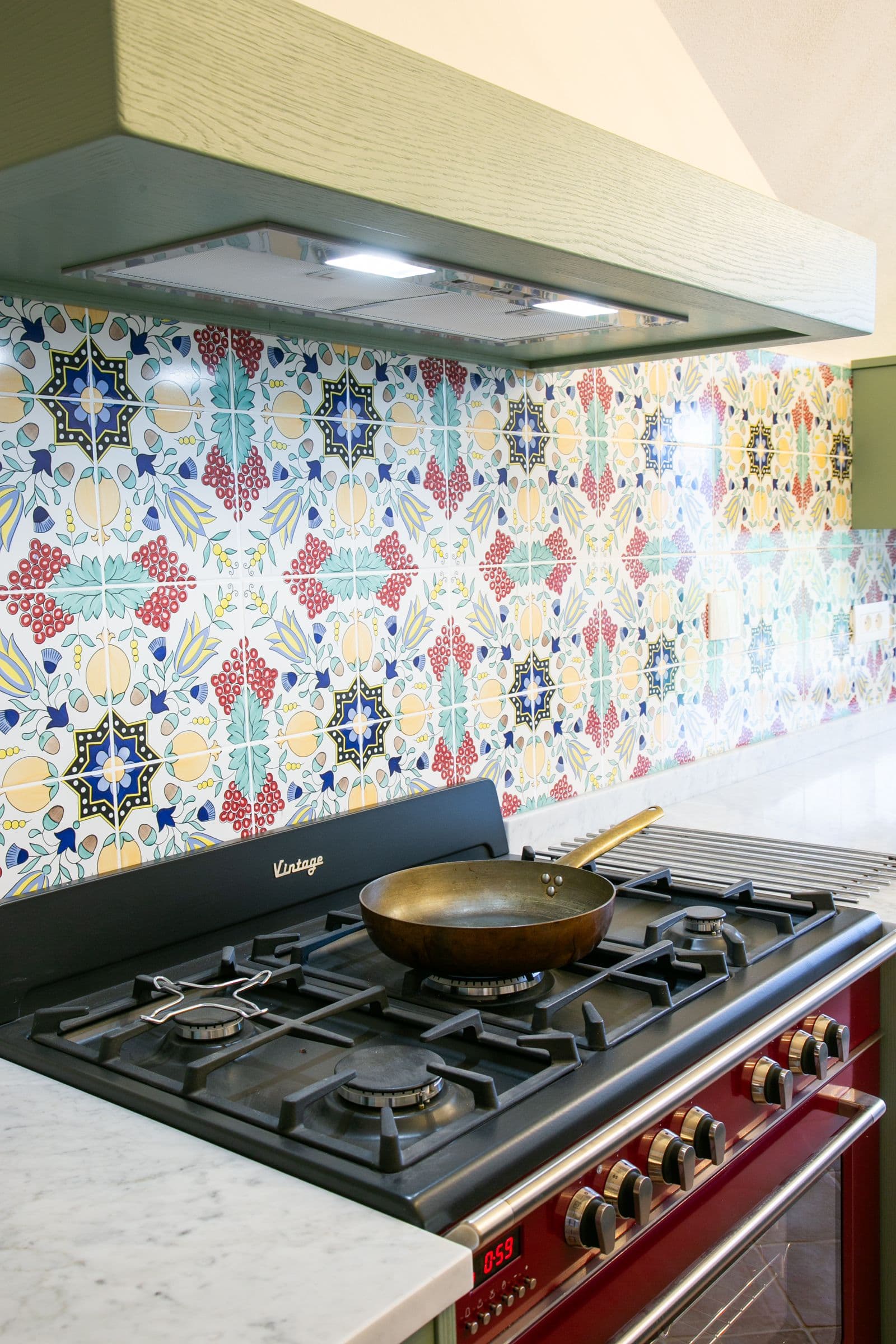
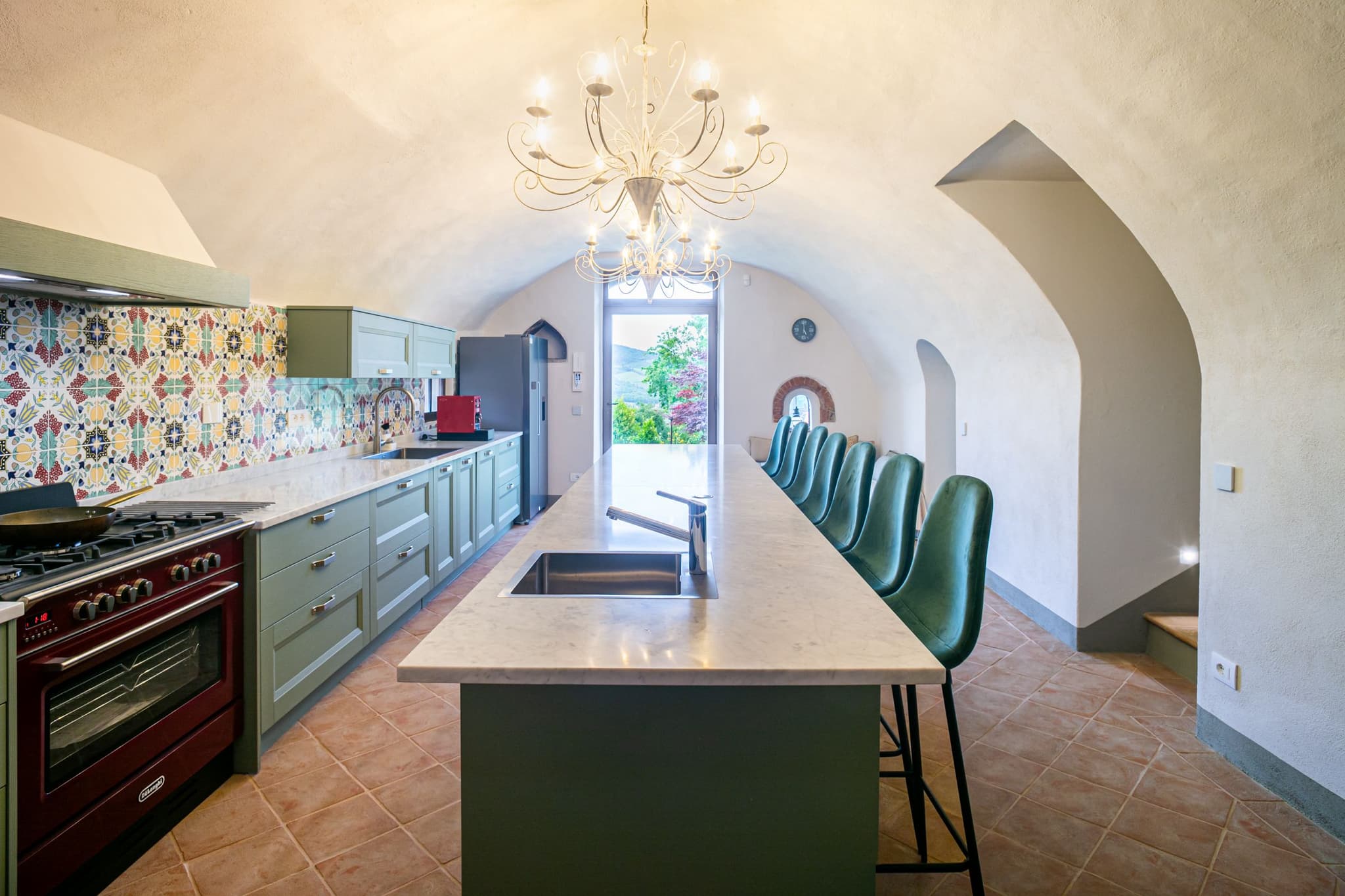
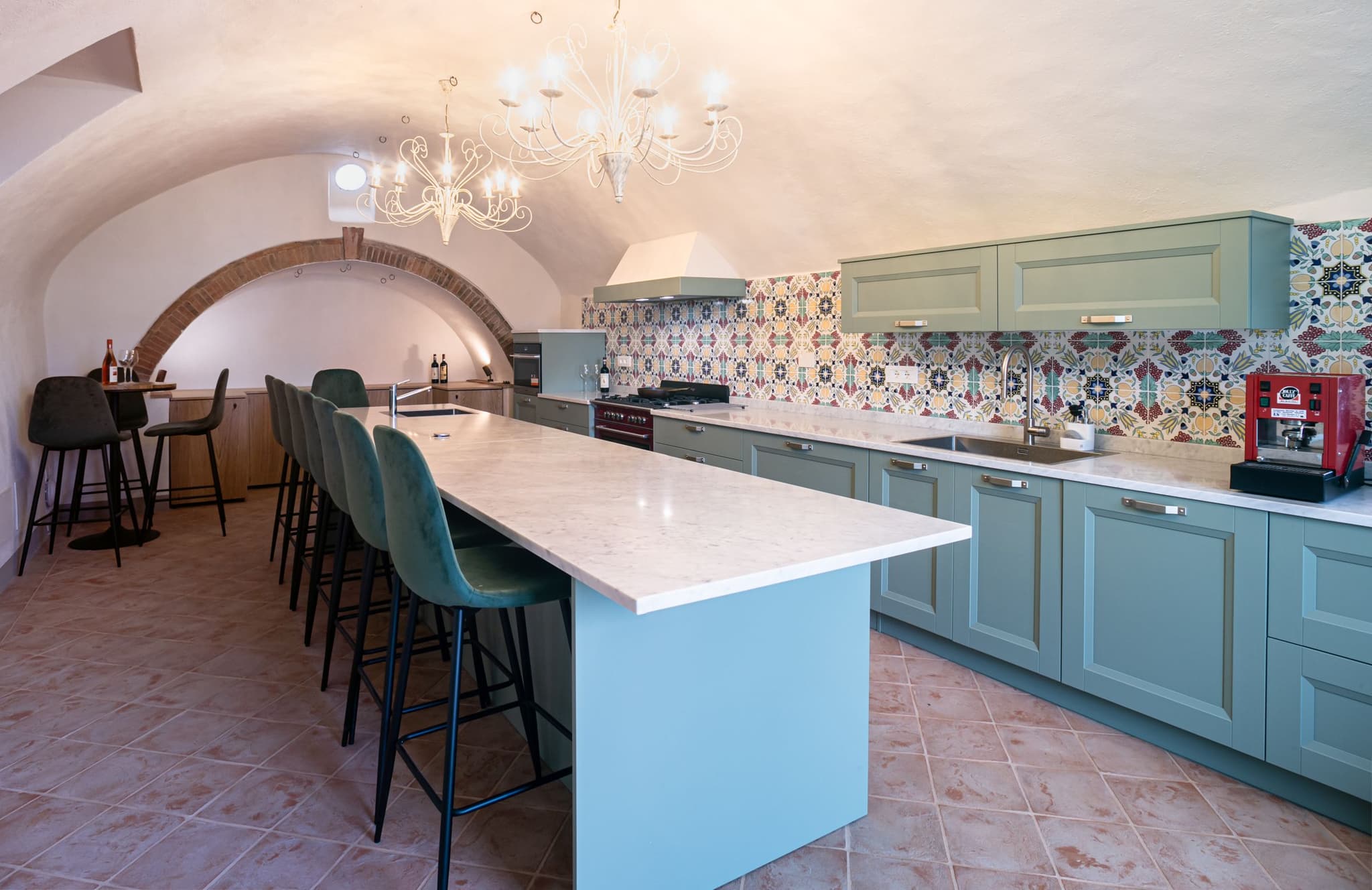
At the heart of the villa, the grand kitchen sits below ground. A long arched ceiling, the original hooks still in place that once held salami and prosciutto through the cold winter months. A slab of Carrara marble runs the length of the room, dusted with flour as it has been for centuries. Breakfast, cooking classes, dinner with the chef. A glass door opens to the dining gazebo and the stone barbecue.
The Rhythm of Soil and Sun
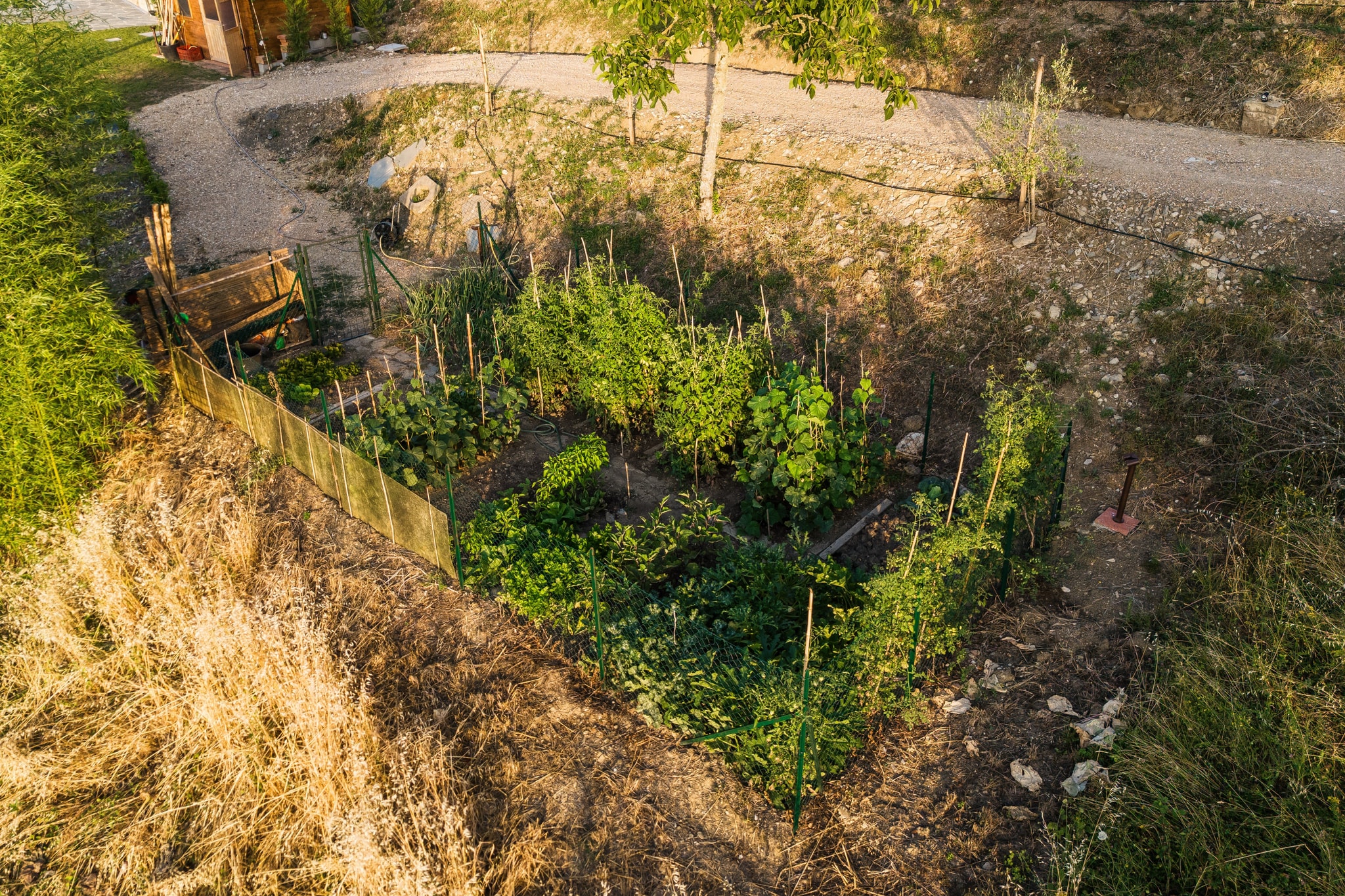
Below the terrace, L'Orto keeps its own calendar. Rosemary grows thick against the stone wall. Tomatoes in rows, picked still warm and on the plate within the hour. Zucchini and aubergine grilled before guests sit down. Not farm-to-table as a concept. This is how lunch happens
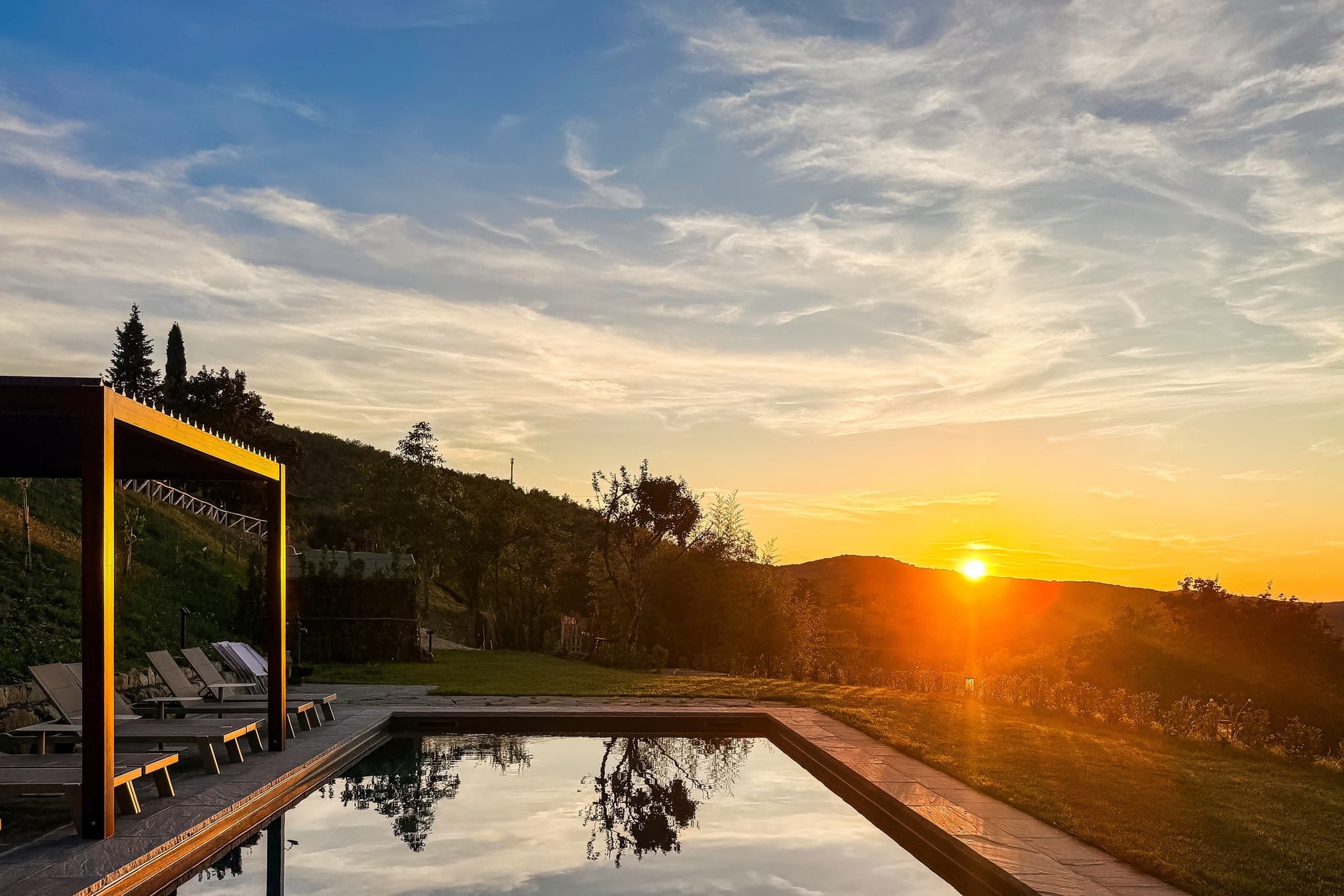
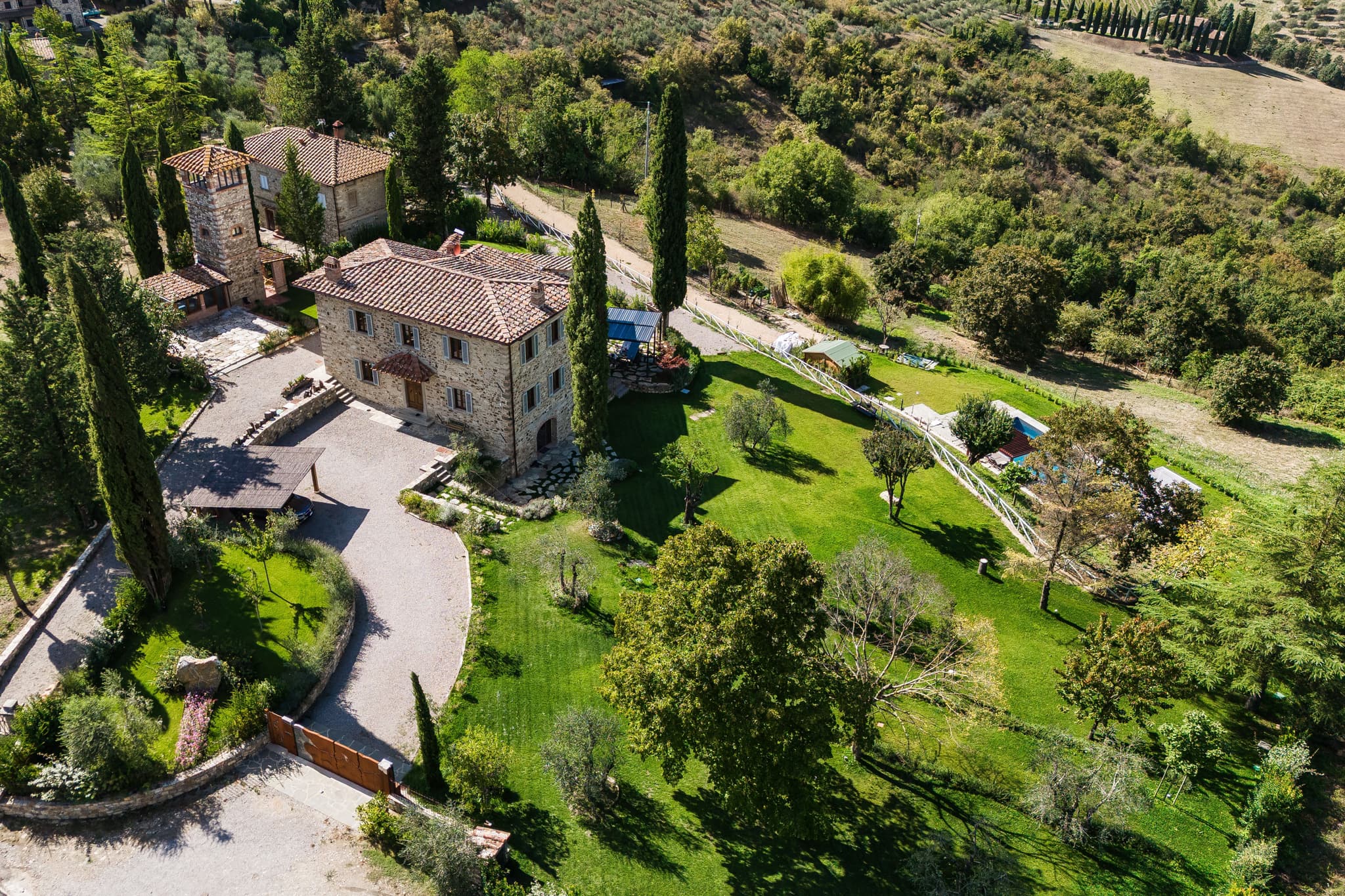
The pool sits on the lower terrace, eleven metres long, facing west. In the afternoon, cicadas and the occasional splash. At sunset, the surface catches gold.
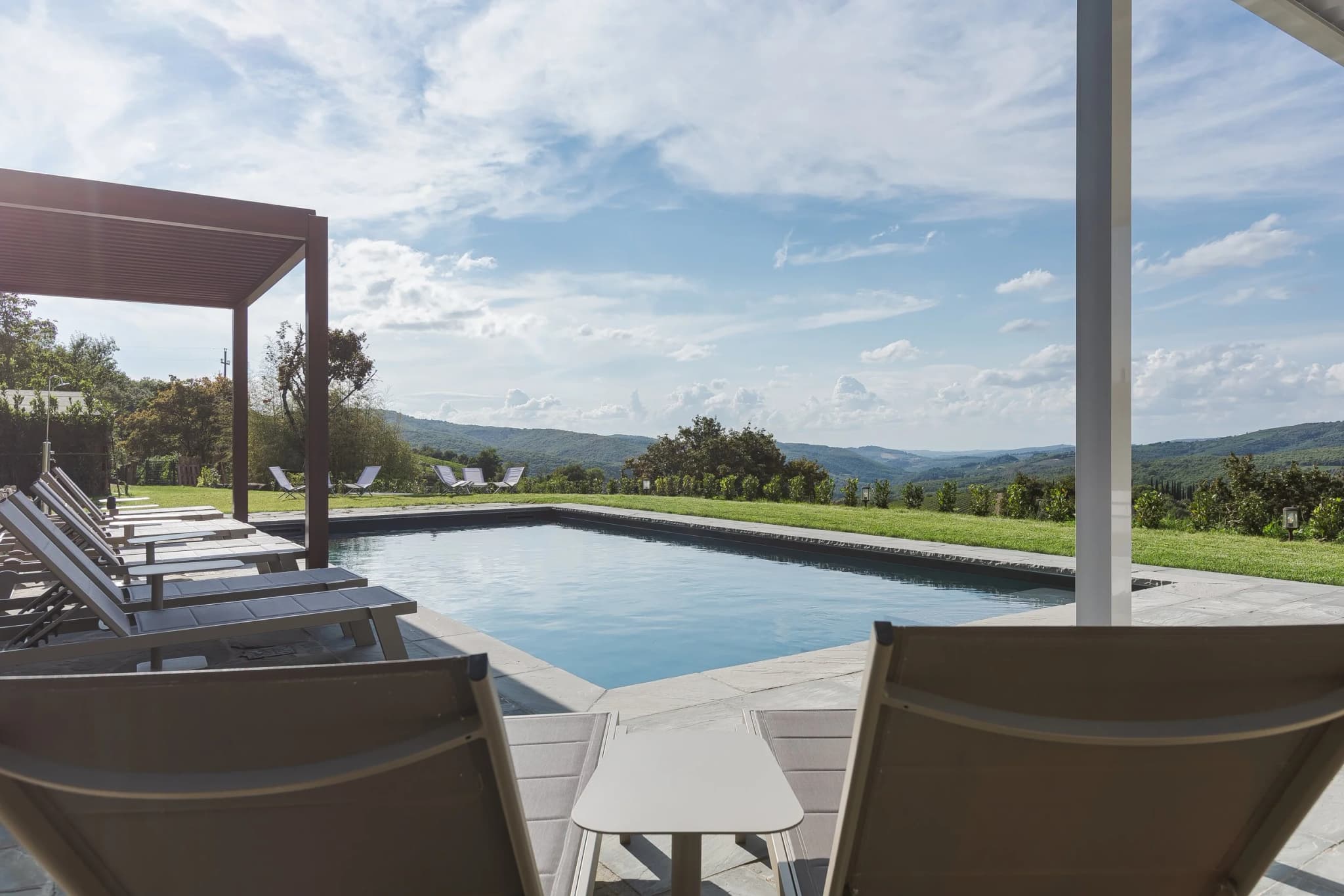
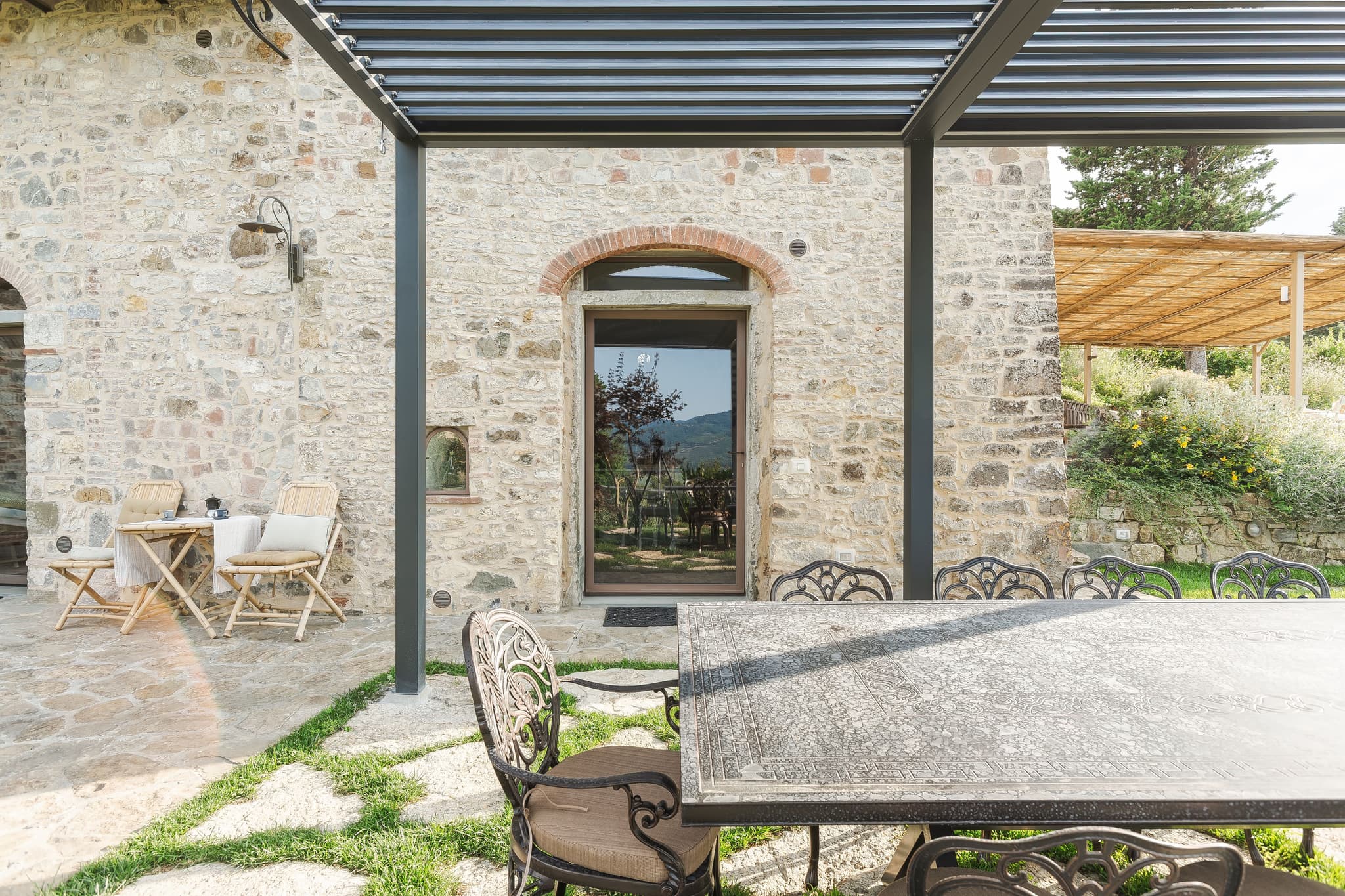
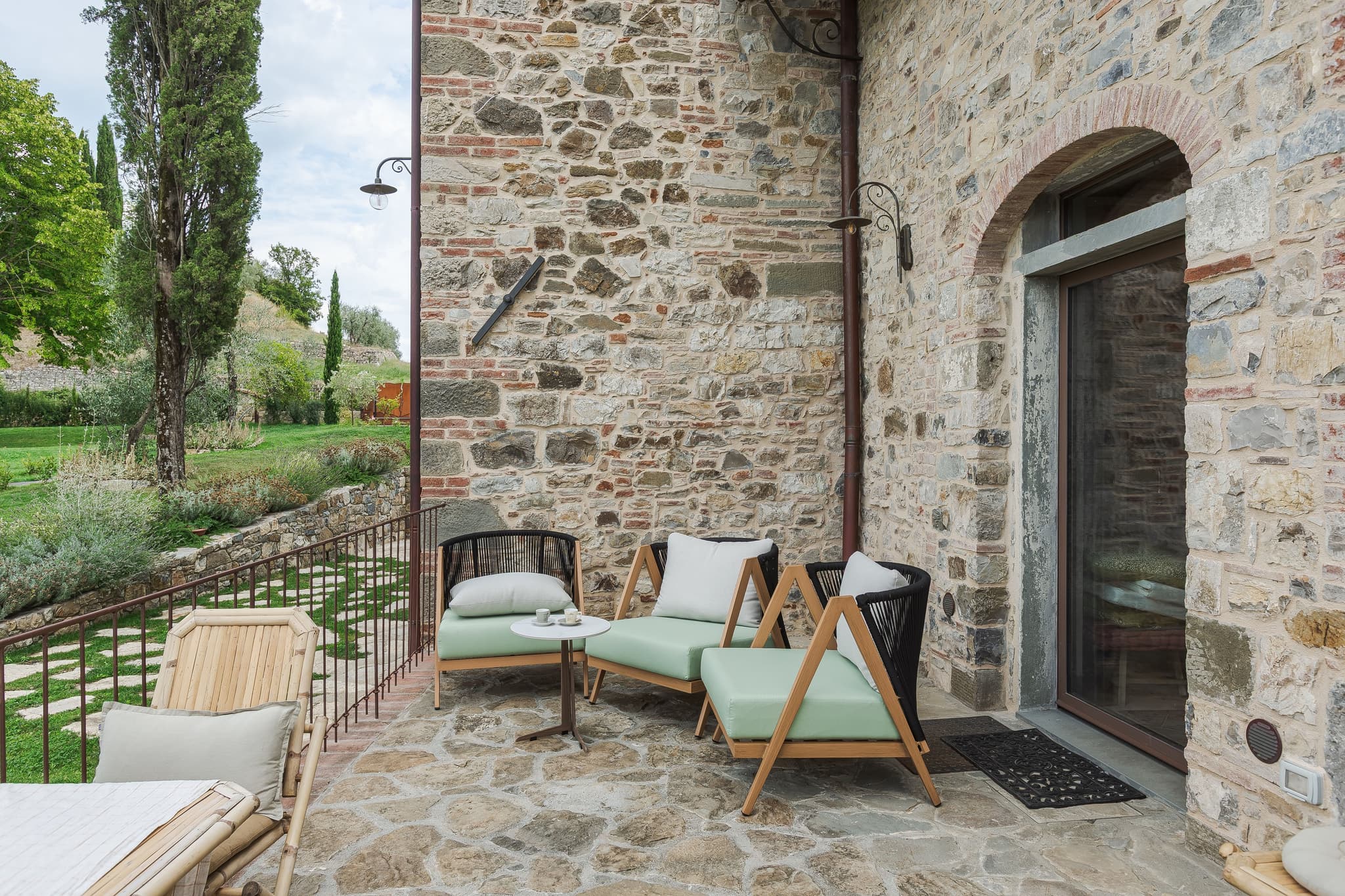
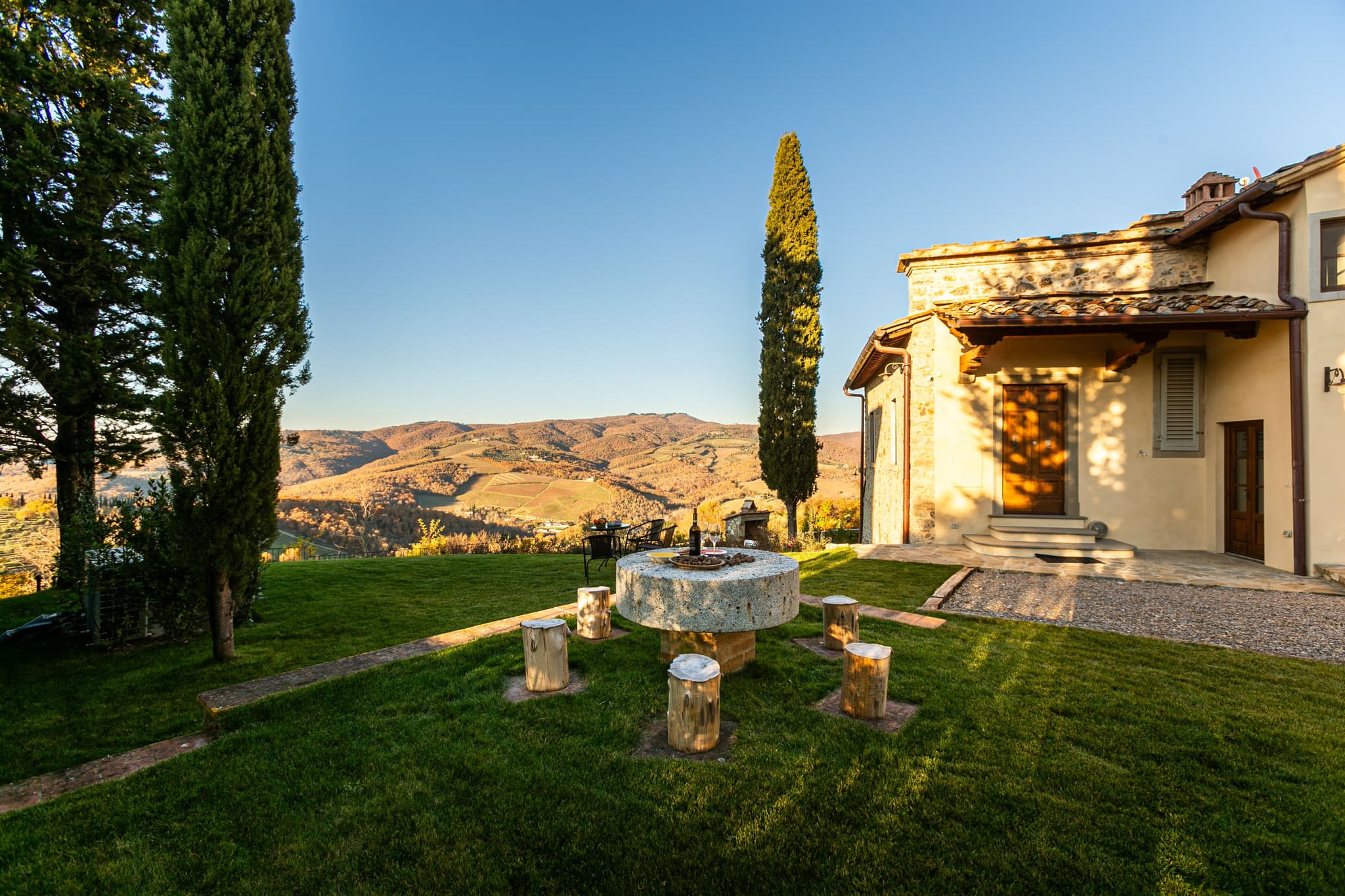
The villa unfolds across several terraces, each framing a different angle of the valley and a different mood. Stone underfoot, gazebos for shade. The original barbecue on the upper terrace.
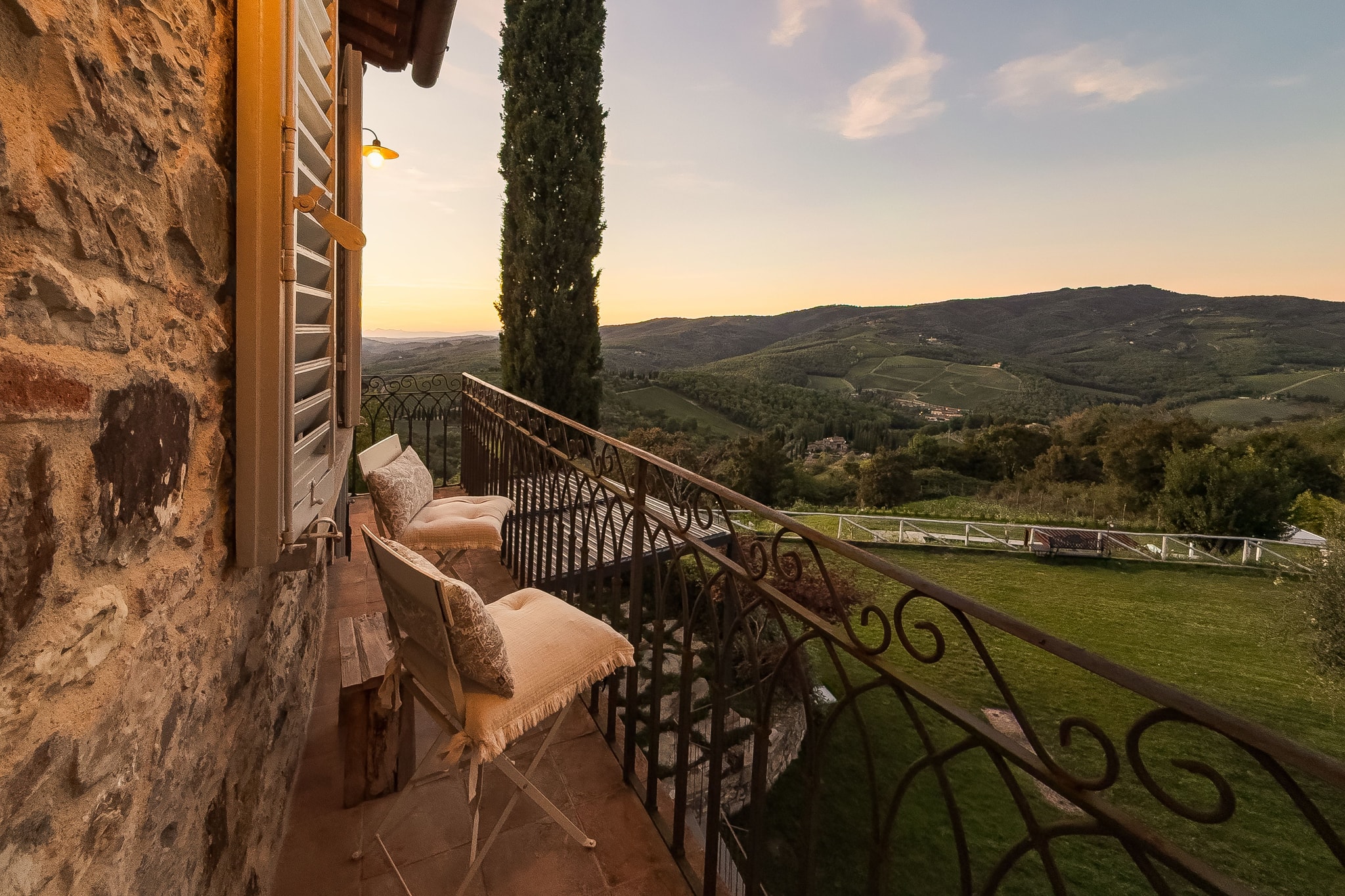
From Camera Rosa, a small Romeo and Juliet balcony looks west across the garden and pool. It was built for newlyweds in the original villa, two people, a railing, and the valley below. At golden hour the cypress lines deepen into shadow and the bells of Radda mark the hour.
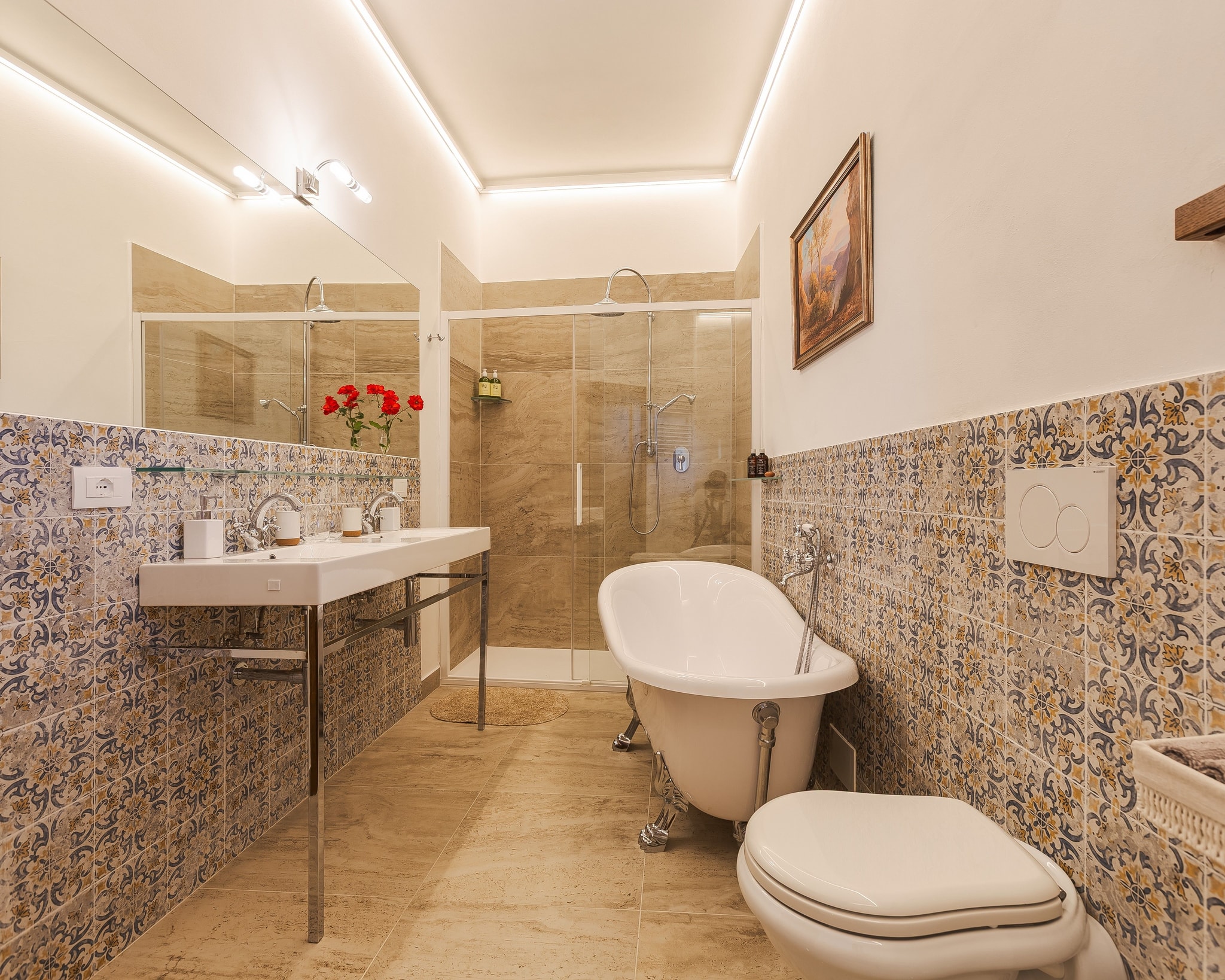
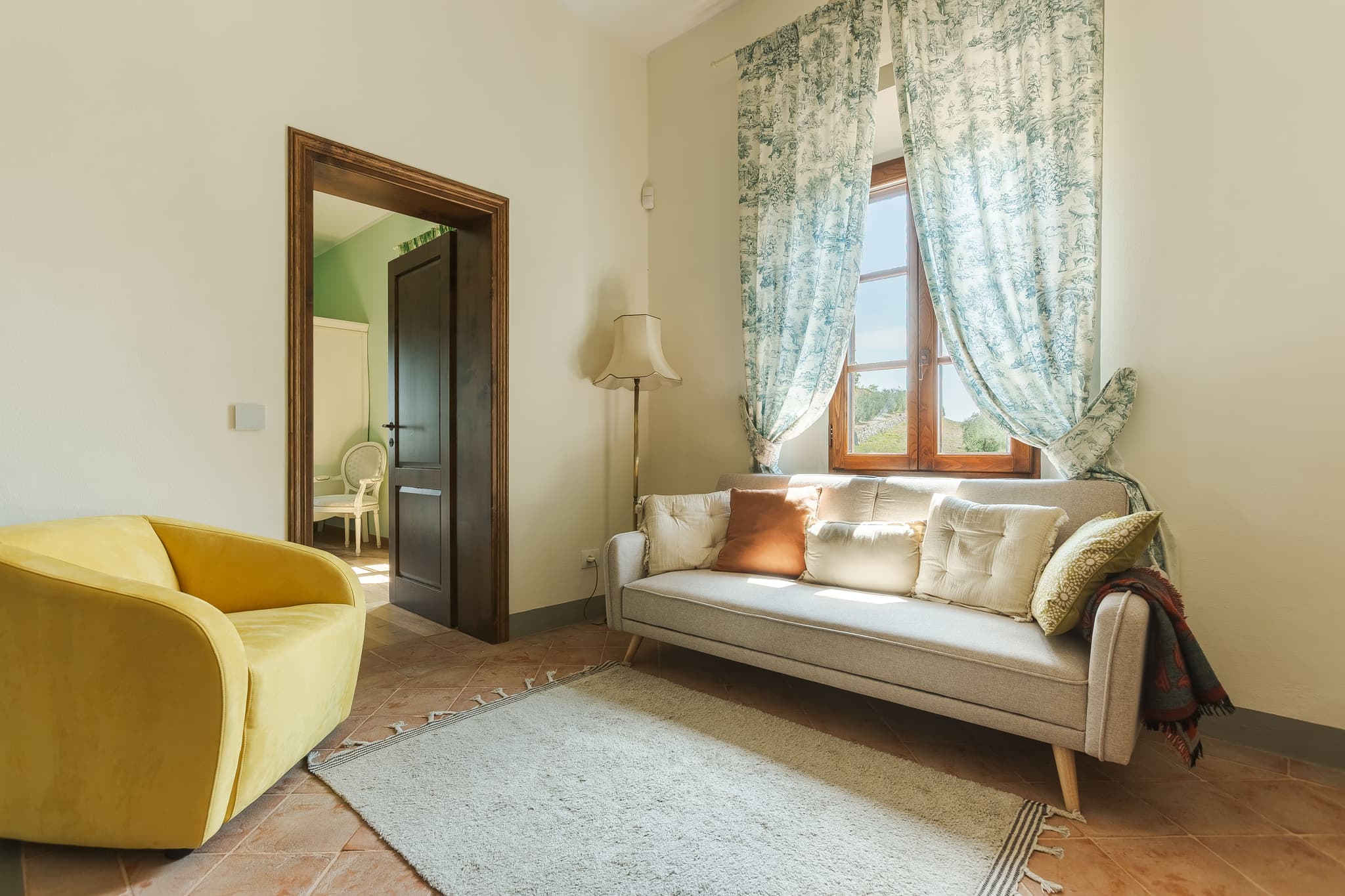
Every bedroom carries its own en-suite, handmade Tuscan tile, the soft glow of stone underfoot. The hexagonal floor of Camera Rosa, the clawfoot tub off Camera Verde, the stone arch over the sink in Camera Azzurra.
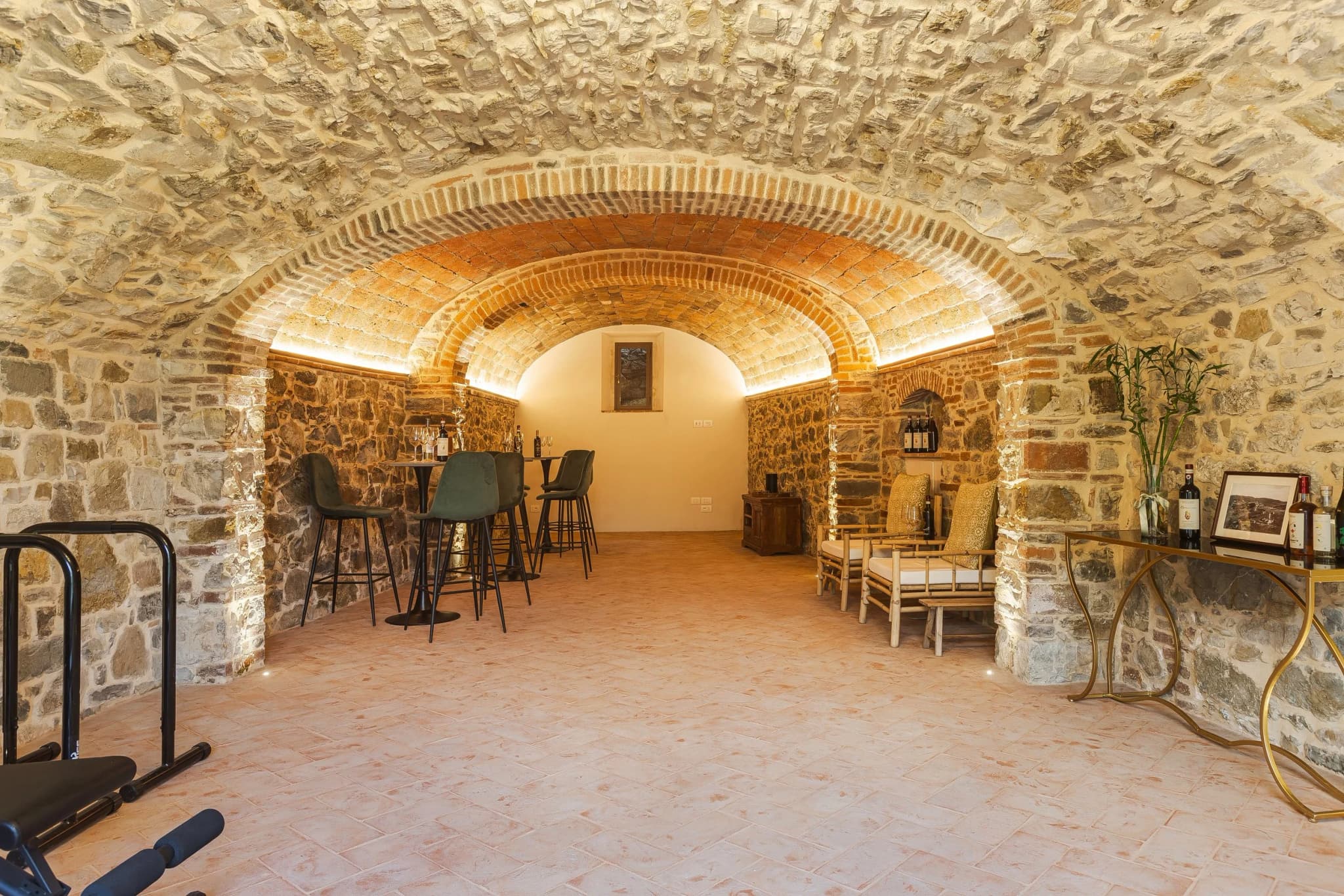
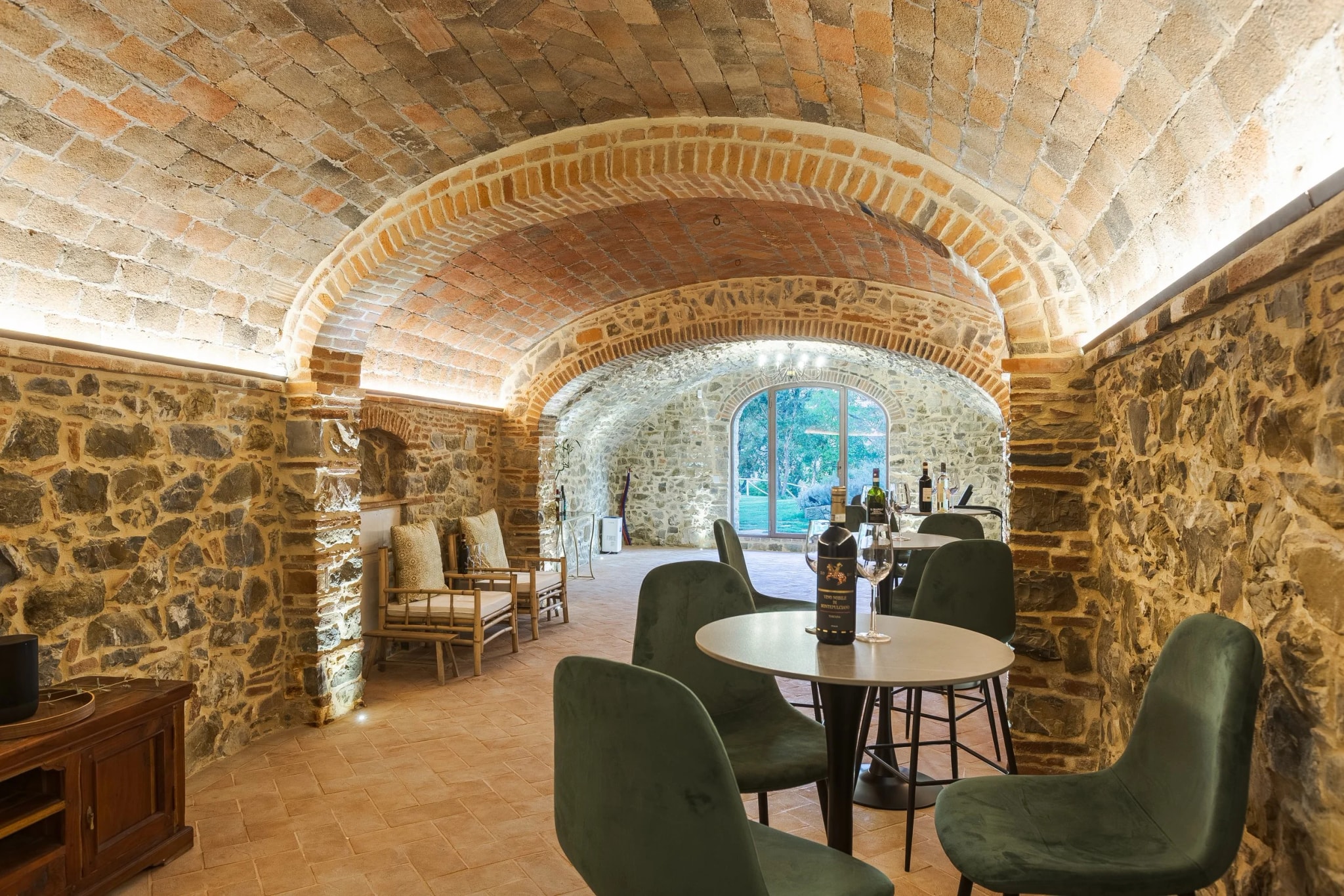
You descend into stone. The cellar was carved in the seventeenth century, when this was a working estate. The restoration took a year, each brick removed and reinstated by hand. The hollow where grapes were delivered is still in the wall. The arches now host candlelit dinners, tastings, celebrations, and the occasional concert. Glass doors open to the garden.
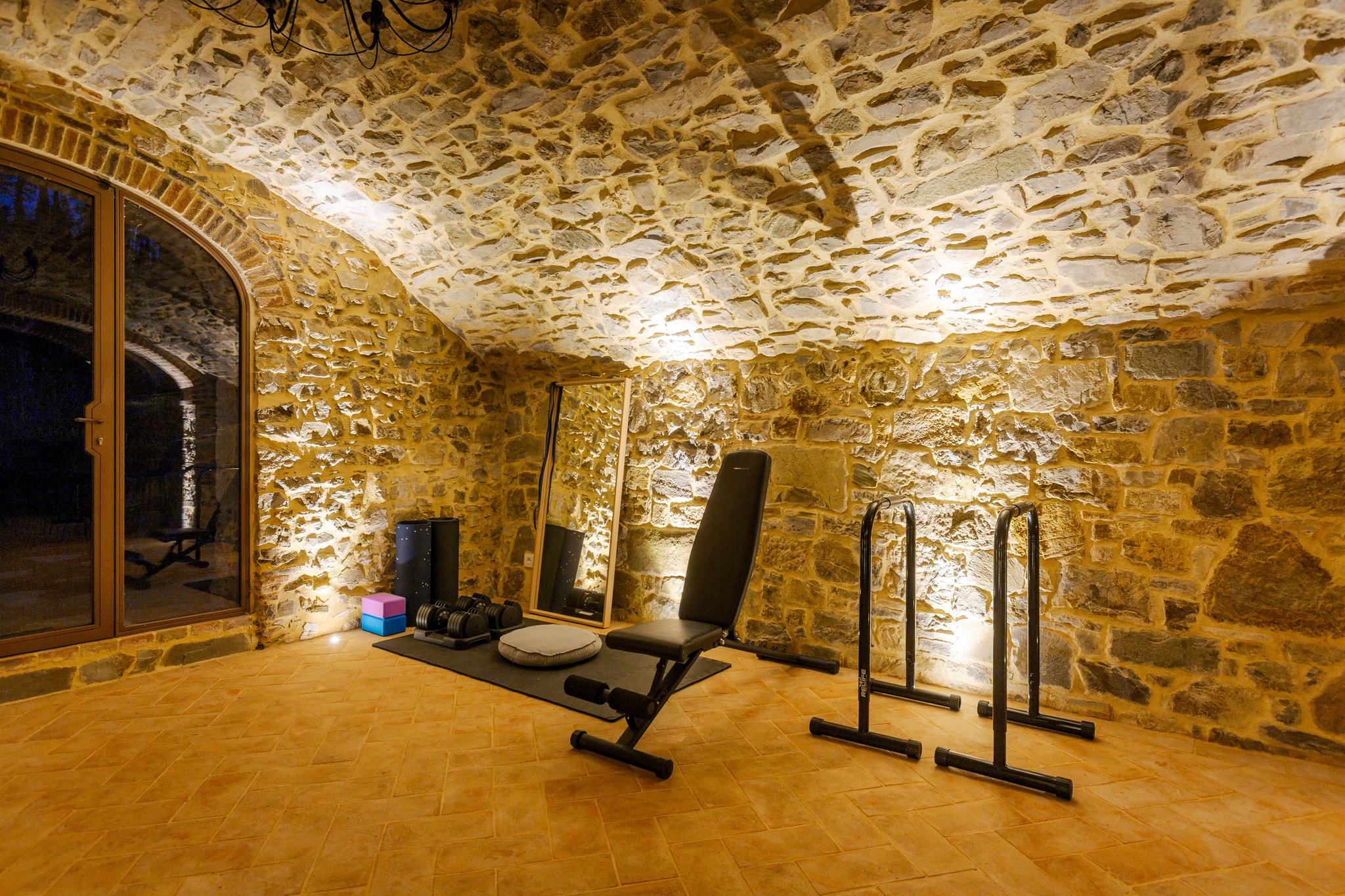
A quiet, fully-equipped space to keep your rhythm while away — morning weights, a stretch after a day in the hills, the Chianti light through the windows.
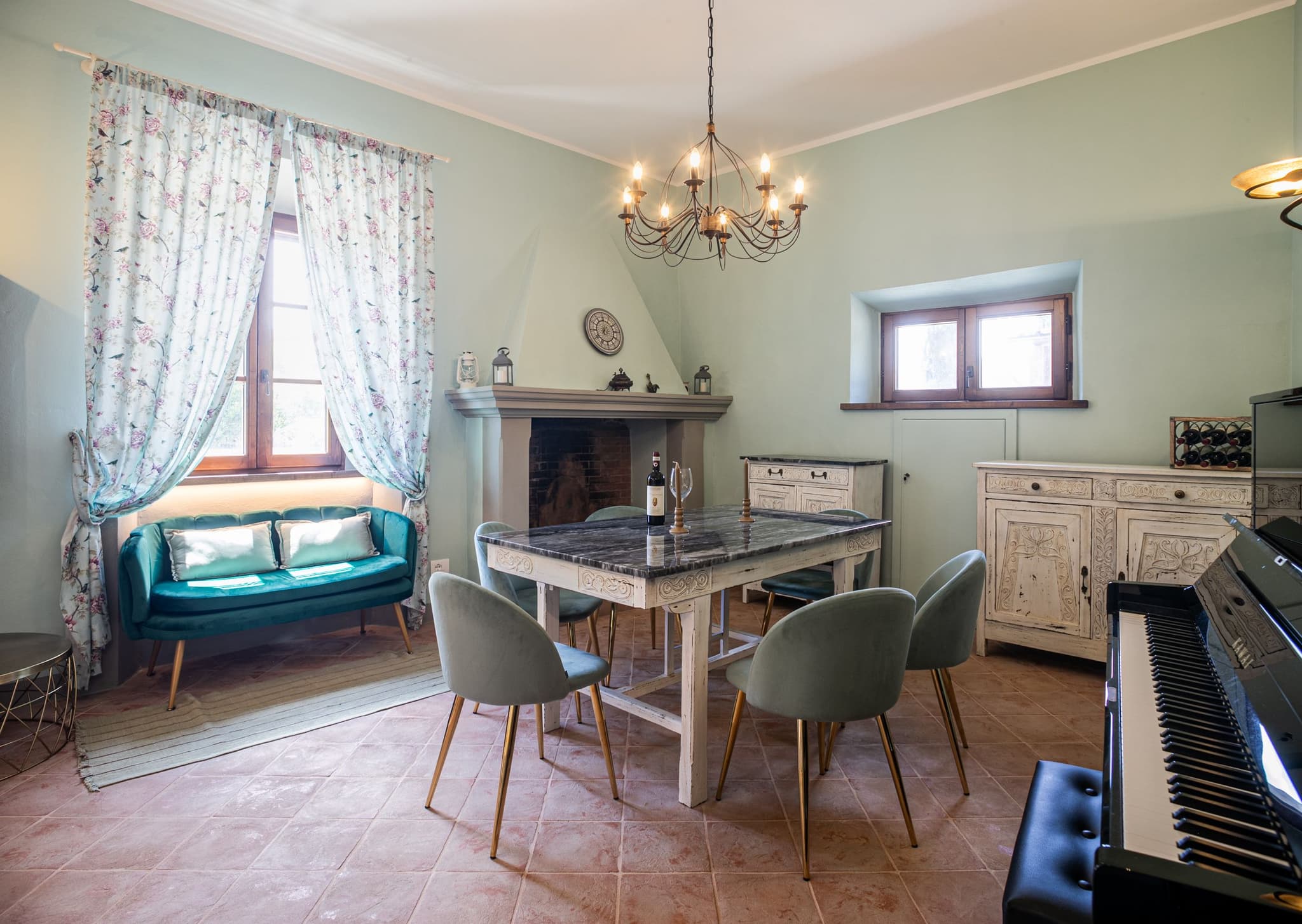
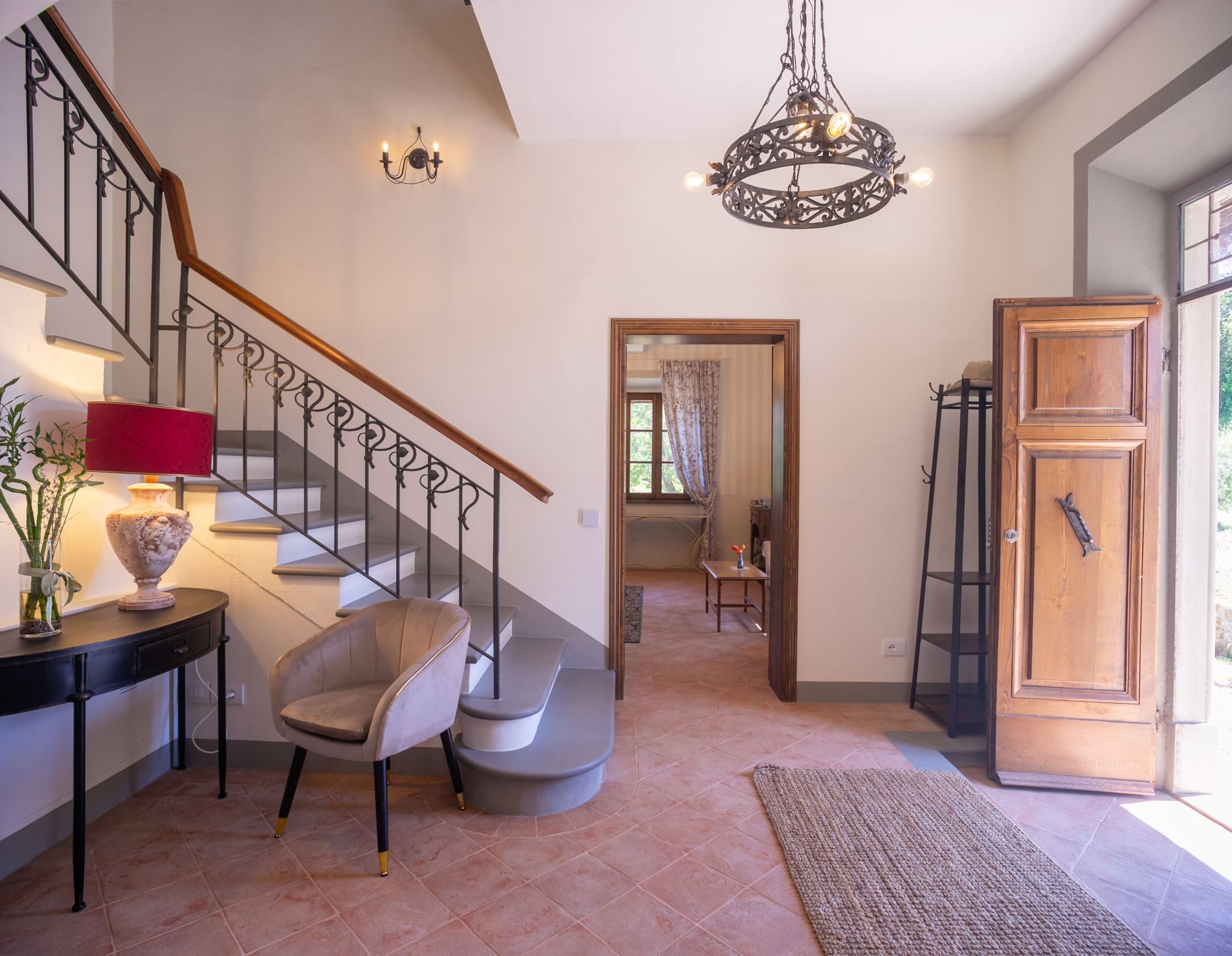
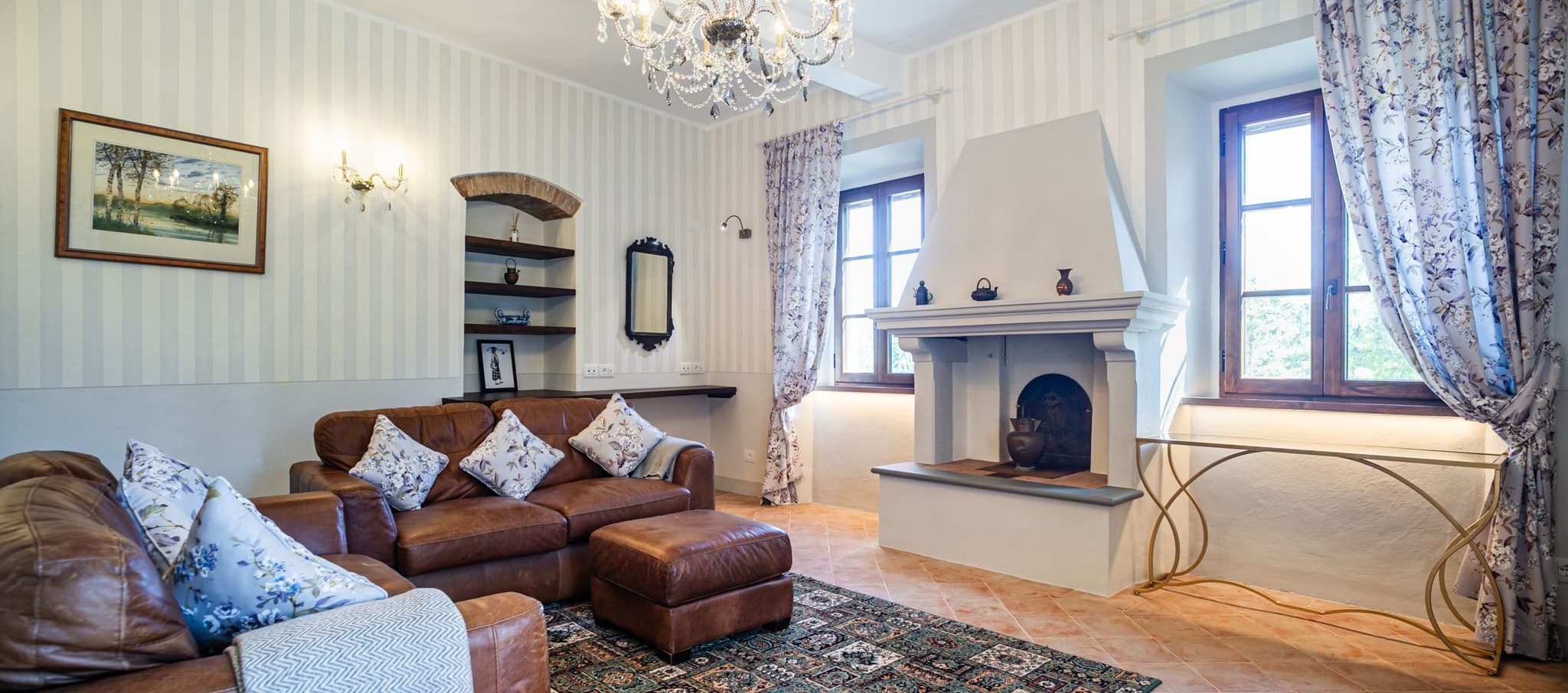
Beneath the handmade cotto floors, a radiant water system holds a steady temperature through the villa. Warm in winter, cool in summer, all without radiators, vents, drafts, or noise. Each room can be set to its own temperature, adjusted on request. The technology is invisible. The comfort is not.
Your villa awaits
Tell us your dates and the kind of stay you have in mind, and we will craft the rest.
Begin your stay